


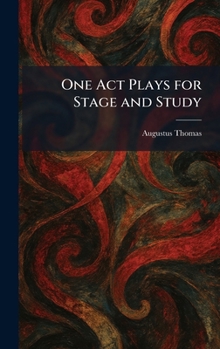
One Act Plays for Stage and Study

"One Act Plays for Stage and Study" is a comprehensive collection of short dramatic works curated specifically for the needs of performers, students, and enthusiasts of the theater. This anthology showcases the versatility and impact of the one-act play, a form that demands concise storytelling, sharp characterization, and immediate emotional engagement. Covering a wide range of themes and styles, the plays included provide a valuable snapshot of dramatic writing from the early 20th century, offering material that is as effective in a staged production as it is in a classroom or private study setting.
With a preface by Augustus Thomas, this volume emphasizes the practical aspects of dramatic craft. Each piece has been selected for its literary quality and its viability as a performance piece, making it an essential resource for amateur and professional theater groups looking for concise, high-impact scripts. The collection serves not only as a repository of historical dramatic literature but also as a functional manual for those learning the intricacies of stagecraft and dialogue. Whether utilized for script analysis or live performance, "One Act Plays for Stage and Study" remains a significant testament to the enduring power of short-form drama.
This work has been selected by scholars as being culturally important, and is part of the knowledge base of civilization as we know it. This work was reproduced from the original artifact, and remains as true to the original work as possible. Therefore, you may see the original copyright references, library stamps (as most of these works have been housed in our most important libraries around the world), and other notations in the work.
This work is in the public domain in the United States of America, and possibly other nations. Within the United States, you may freely copy and distribute this work, as no entity (individual or corporate) has a copyright on the body of the work.
As a reproduction of a historical artifact, this work may contain missing or blurred pages, poor pictures, errant marks, etc. Scholars believe, and we concur, that this work is important enough to be preserved, reproduced, and made generally available to the public. We appreciate your support of the preservation process, and thank you for being an important part of keeping this knowledge alive and relevant.
Customer Reviews
ThriftBooks ® and the ThriftBooks ® logo are registered trademarks of Thrift Books Global, LLC
