


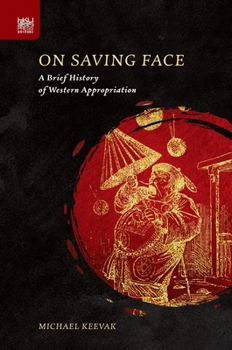
On Saving Face: A Brief History of Western Appropriation
No Customer Reviews

In On Saving Face, Michael Keevak traces the Western reception of the Chinese concept of "face" during the past two hundred years, arguing that it has always been linked to nineteenth-century colonialism. "Lose face" and "save face" have become so normalized in modern European languages that most users do not even realize that they are of Chinese origin. "Face" is an extremely complex and varied notion in all East Asian cultures. It involves proper behavior and the avoidance of conflict, encompassing every aspect of one's place in society as well as one's relationships with other people. One can "give face," "get face," "fight for face," "tear up face," and a host of other expressions. But when it began to become known to the Western trading community in China beginning in the middle of the nineteenth century, it was distorted and reduced to two phrases only, "lose face" and "save face," both of which were used to suggest distinctly Western ideas of humiliation, embarrassment, honor, and reputation. The Chinese were judged as a race obsessed with the fear of "losing (their) face," and they constantly resorted to vain attempts to "save" it in the face of Western correction. "Lose face" may be an authentic Chinese expression but "save face" is different. "Save face" was actually a Western invention.
Format:Hardcover
Language:English
ISBN:9888754289
ISBN13:9789888754281
Release Date:January 2023
Publisher:Hong Kong University Press
Length:136 Pages
Weight:0.72 lbs.
Dimensions:0.5" x 6.3" x 9.2"
Customer Reviews
0 rating
Copyright © 2026 Thriftbooks.com
Terms of Use | Privacy Policy | Do Not Sell/Share My Personal Information | Cookie Policy | Cookie Preferences | Accessibility Statement
ThriftBooks ® and the ThriftBooks ® logo are registered trademarks of Thrift Books Global, LLC
ThriftBooks ® and the ThriftBooks ® logo are registered trademarks of Thrift Books Global, LLC
