


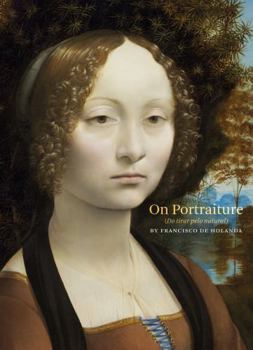
On Portraiture

The earliest known treatise dedicated to portraiture in its first English translation along with commentaries and essays.
Francisco de Holanda's Do Tirar polo Natural (On Portraiture) is pioneering as the earliest known treatise dedicated solely to portraiture. Yet, it has remained scarcely studied outside Portugal due to its limited manuscript circulation and a 1563 Spanish translation only published in 1921. Its first appearance in English is therefore important: it not only makes Holanda's ideas accessible to a broader scholarly audience but also challenges the Italy-centred canon of Renaissance art theory by highlighting a Portuguese perspective. Holanda's dialogues demonstrate both his admiration for Italian models--especially Michelangelo--and his desire to affirm the sophistication of Lisbon's court, positioning portraiture as the noblest form of painting for its capacity to capture likeness and memory. This edition thus redefines the cultural geography of Renaissance theory, revealing tensions between imitation and independence, and raising new, sometimes contentious, questions about portraiture's role in shaping identity and power.
Customer Reviews
ThriftBooks® and the ThriftBooks® logo are registered trademarks of Thrift Books Global, LLC
