


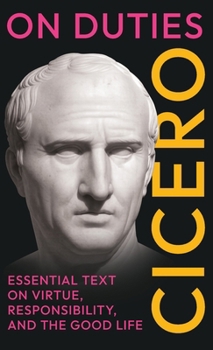
On Duties: (De Officiis) - Complete in Three Books

A seminal work of moral and political philosophy by the Ancient Roman statesman and thinker Marcus Tuilius Cicero.
Written in 44 BC during the final months of his life, the treatise sets out Cicero's mature reflections on how to live honourably, fulfil moral obligations, and balance personal conduct with public responsibility. Framed as a letter to his son, the work draws deeply on Greek stoic thought and the teachings of Panaetius.
Organised into three books, the volume examines the foundations of ethical life. Book I explores what is honourable (honestum), identifying the four cardinal virtues from which all duties arise. Book II turns to what is advantageous (utile), addressing ambition, influence, and success in public life. Book III confronts situations in which moral duty appears to conflict with self-interest, arguing that true advantage and virtue can never be opposed.
Through its historical examples and careful reasoning, On Duties stands as one of the most influential ethical texts in Western history. Read and admired throughout the centuries, it remains a timeless guide to integrity, civic responsibility, and the enduring question of how to live a good and honourable life-an essential text for understanding Stoic ethics and classical philosophy.
Customer Reviews
ThriftBooks® and the ThriftBooks® logo are registered trademarks of Thrift Books Global, LLC
