


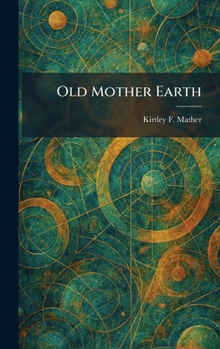
Old Mother Earth

"Old Mother Earth" is an engaging exploration of the geological history and natural processes that have shaped our planet. Written by the distinguished geologist Kirtley F. Mather, this work translates complex scientific concepts into accessible narratives for a general audience. The book delves into the fundamental principles of earth science, examining the origins of mountains, the movement of glaciers, and the slow but powerful forces of erosion and sedimentation that redefine the landscape over millions of years.
Beyond physical geology, the text explores the history of life on Earth, tracing the evolutionary path from early organisms to the rise of humanity. Mather discusses the significance of fossils as a record of the past and explains how the Earth's changing environment has influenced the development of various species. With a focus on the interconnectedness of all natural phenomena, "Old Mother Earth" serves as a timeless introduction to the wonders of the natural world and the scientific methods used to uncover its secrets. This work remains a classic example of early twentieth-century scientific communication, bridging the gap between academic research and public understanding of the earth sciences.
This work has been selected by scholars as being culturally important, and is part of the knowledge base of civilization as we know it. This work was reproduced from the original artifact, and remains as true to the original work as possible. Therefore, you may see the original copyright references, library stamps (as most of these works have been housed in our most important libraries around the world), and other notations in the work.
This work is in the public domain in the United States of America, and possibly other nations. Within the United States, you may freely copy and distribute this work, as no entity (individual or corporate) has a copyright on the body of the work.
As a reproduction of a historical artifact, this work may contain missing or blurred pages, poor pictures, errant marks, etc. Scholars believe, and we concur, that this work is important enough to be preserved, reproduced, and made generally available to the public. We appreciate your support of the preservation process, and thank you for being an important part of keeping this knowledge alive and relevant.
Customer Reviews
ThriftBooks ® and the ThriftBooks ® logo are registered trademarks of Thrift Books Global, LLC
