


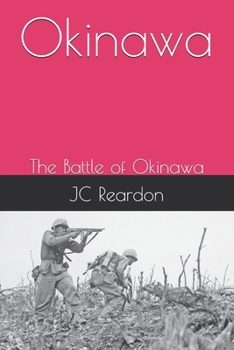
Okinawa: The Battle of Okinawa
No Customer Reviews

What Was It?
The Battle of Okinawa (April 1 - June 22, 1945) was the last and bloodiest major battle of World War II.
It was fought between the United States (and Allied forces) and Imperial Japan over the island of Okinawa, part of the Ryukyu Islands, just 350 miles (560 km) from mainland Japan.
Okinawa was critical because it would serve as the staging area for a potential invasion of Japan. Key FactsOperation name: Operation IcebergUS Commander: General Simon Bolivar Buckner Jr.Japanese Commander: General Mitsuru UshijimaUS Forces: Around 180,000 soldiers and MarinesJapanese Forces: Around 100,000 troops + thousands of armed civiliansCasualties: U.S.: 50,000 wounded, 12,500 killed (including General Buckner himself)Japan: 100,000 soldiers killed, plus tens of thousands of Okinawan civiliansCivilians: Estimates suggest over 100,000 Okinawan civilians died What Happened During the BattleApril 1, 1945:
U.S. Marines and Army troops land - the beach landings are strangely easy (nicknamed "Love Day" for how smooth it was).Japanese Defensive Strategy:
Instead of fighting at the beaches, Japanese forces dug in deep inland - in caves, bunkers, and tunnels, creating a nightmare of heavily fortified positions.Fierce Combat:
Fighting became brutal, with torrential rain, mud, artillery, grenades, flame-throwers, and bayonets common.Kamikaze Attacks:
Over 1,500 Japanese kamikaze (suicidal airplane attacks) struck Allied ships. The U.S. Navy suffered heavy damage - more than 30 ships sunk, hundreds damaged.Notable Battles within Okinawa: Shuri Line: Main line of Japanese defenses - breaking through it took months.Sugar Loaf Hill: A key position - fought over with horrific casualties.June 22, 1945:
Organized Japanese resistance collapses. General Ushijima commits ritual suicide (seppuku). Why It MatteredHuge Cost:
The horror and casualties made U.S. leaders realize a full-scale invasion of Japan would be catastrophic - millions could die.Impact on Atomic Bomb Decision:
The massive bloodshed directly influenced the U.S. decision to drop atomic bombs to end the war more quickly.Civilian Tragedy:
Okinawan civilians were caught in the crossfire - many were forced by the Japanese army to commit suicide rather than surrender, due to propaganda that Americans would torture them.First Major Use of Kamikazes:
Suicide tactics became a major threat, signaling Japan's desperation. In Short:
Okinawa showed the world just how deadly and desperate the final phase of the Pacific War had become.
It set the stage for the final, tragic end of the conflict - Hiroshima, Nagasaki, and Japan's surrender.
The Battle of Okinawa (April 1 - June 22, 1945) was the last and bloodiest major battle of World War II.
It was fought between the United States (and Allied forces) and Imperial Japan over the island of Okinawa, part of the Ryukyu Islands, just 350 miles (560 km) from mainland Japan.
Okinawa was critical because it would serve as the staging area for a potential invasion of Japan. Key FactsOperation name: Operation IcebergUS Commander: General Simon Bolivar Buckner Jr.Japanese Commander: General Mitsuru UshijimaUS Forces: Around 180,000 soldiers and MarinesJapanese Forces: Around 100,000 troops + thousands of armed civiliansCasualties: U.S.: 50,000 wounded, 12,500 killed (including General Buckner himself)Japan: 100,000 soldiers killed, plus tens of thousands of Okinawan civiliansCivilians: Estimates suggest over 100,000 Okinawan civilians died What Happened During the BattleApril 1, 1945:
U.S. Marines and Army troops land - the beach landings are strangely easy (nicknamed "Love Day" for how smooth it was).Japanese Defensive Strategy:
Instead of fighting at the beaches, Japanese forces dug in deep inland - in caves, bunkers, and tunnels, creating a nightmare of heavily fortified positions.Fierce Combat:
Fighting became brutal, with torrential rain, mud, artillery, grenades, flame-throwers, and bayonets common.Kamikaze Attacks:
Over 1,500 Japanese kamikaze (suicidal airplane attacks) struck Allied ships. The U.S. Navy suffered heavy damage - more than 30 ships sunk, hundreds damaged.Notable Battles within Okinawa: Shuri Line: Main line of Japanese defenses - breaking through it took months.Sugar Loaf Hill: A key position - fought over with horrific casualties.June 22, 1945:
Organized Japanese resistance collapses. General Ushijima commits ritual suicide (seppuku). Why It MatteredHuge Cost:
The horror and casualties made U.S. leaders realize a full-scale invasion of Japan would be catastrophic - millions could die.Impact on Atomic Bomb Decision:
The massive bloodshed directly influenced the U.S. decision to drop atomic bombs to end the war more quickly.Civilian Tragedy:
Okinawan civilians were caught in the crossfire - many were forced by the Japanese army to commit suicide rather than surrender, due to propaganda that Americans would torture them.First Major Use of Kamikazes:
Suicide tactics became a major threat, signaling Japan's desperation. In Short:
Okinawa showed the world just how deadly and desperate the final phase of the Pacific War had become.
It set the stage for the final, tragic end of the conflict - Hiroshima, Nagasaki, and Japan's surrender.
Format:Paperback
Language:English
ISBN:B0F6LMWZ5F
ISBN13:9798281566278
Release Date:April 2025
Publisher:Independently Published
Length:264 Pages
Weight:0.79 lbs.
Dimensions:0.6" x 6.0" x 9.0"
Related Subjects
HistoryCustomer Reviews
0 rating
Copyright © 2026 Thriftbooks.com
Terms of Use | Privacy Policy | Do Not Sell/Share My Personal Information | Cookie Notice | Cookie Preferences | Accessibility Statement
ThriftBooks ® and the ThriftBooks ® logo are registered trademarks of Thrift Books Global, LLC
ThriftBooks ® and the ThriftBooks ® logo are registered trademarks of Thrift Books Global, LLC
