


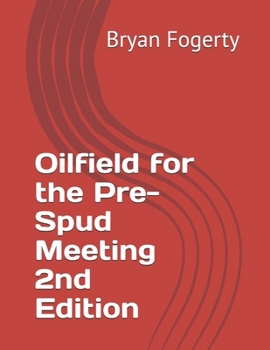
Oilfield for the Pre-Spud Meeting
No Customer Reviews

Have you ever found yourself sitting in a meeting, terrified that someone might ask you a question because you have no idea what they are talking about? Shales, sedimentary rock, basement rock, basins, anticlines, faults, limestone, azimuth, LWD, MWD, MPD, LMPR, BOP, annular, BHA... words are flying all over the room and you are struck dumb, like a deer caught in the headlights. You know nothing about the oilfield except for the specific part you play in the grand scheme of things. Sounds familiar? Or maybe you have just started and are trying to pick up a good baseline of knowledge. Fear not. I have been there many times myself, so here is a quick crash guide for the construction of an oil well that you can read before you head into that pre-spud meeting. What is spudding? This is the term used for starting the drilling of a new well. Like most terms used in the oilfield, the word originates from agriculture; a "spud" was originally a tool used for digging up potatoes. Typically, an oil company holds the rights to a lease. They then hire a drilling contractor to drill the well, a cementing company to cement it, and a mud company for drilling fluids. They also bring in a mud logging company for analysis of cuttings, a directional drilling company for deviated holes, a logging company for well logs, and a completion company for the final stages. With all these different entities involved, a meeting is held to coordinate every stage. This book is designed to help those who are new to the oilfield, as well as those who wish to know more about the other rig operations happening around them.
Format:Paperback
Language:English
ISBN:B0GX4MDJCF
ISBN13:9798257064166
Release Date:September 2017
Publisher:Independently Published
Length:168 Pages
Weight:0.89 lbs.
Dimensions:0.4" x 8.5" x 11.0"
Customer Reviews
0 rating
Copyright © 2026 Thriftbooks.com
Terms of Use | Privacy Policy | Do Not Sell/Share My Personal Information | Cookie Policy | Cookie Preferences | Accessibility Statement
ThriftBooks ® and the ThriftBooks ® logo are registered trademarks of Thrift Books Global, LLC
ThriftBooks ® and the ThriftBooks ® logo are registered trademarks of Thrift Books Global, LLC
