


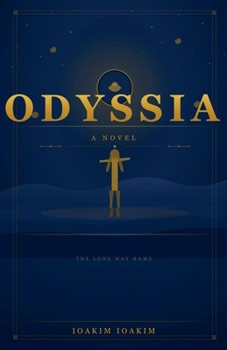
Odyssia

They called him the clever one. They called him the survivor. They built statues of him and sang songs about him and for three thousand years they told his story as though it were a triumph.
It was not a triumph.
ODYSSIA is the complete story of Odysseus - from the boy who grew up on a small rocky island and understood too early that the world was much larger than his life, to the man who spent twenty years trying to get back to that island and had to become someone unrecognizable in order to survive the journey.
Before Troy, he was a king's son who learned cleverness the way you learn a scar - from pain, and early, and permanently. He loved Penelope in the way a man loves a woman who is his equal and knows it. He held his infant son in his arms on the morning his world was still intact and thought: I would do anything for this. He did not know yet what anything would cost.
At Troy, he survived ten years of war by being the man with the plan, the man in the dark, the name that opened the gate. He watched men die who had followed him. He watched Achilles burn and Patroclus fall and the city come down and he carried all of it inside him with the discipline of a man who has learned that grief and usefulness cannot occupy the same space at the same time.
At sea, he lost everything. The twelve ships became one. The one became nothing. He faced the Cyclops and the Sirens and the dead and the woman who kept him for seven years and every encounter stripped another layer from the man who had left Ithaca until what remained was barely recognizable as the person who had set out.
At home - and this is the part the old stories never fully told - the arrival was not a triumph. It was the most frightening thing that had ever happened to him. Twenty years. A wife who had managed without him and become, in the managing, someone complete. A son who had grown into a man in the shape of his father's absence. An island that was exactly the same and entirely different.
ODYSSIA is a novel about what the old myths left out: the human cost of survival, the weight of cleverness used as currency for twenty years, and what it actually means to come home to people who had to learn to live without you.
Not the hero. The man. The whole man. At last.
Customer Reviews
ThriftBooks ® and the ThriftBooks ® logo are registered trademarks of Thrift Books Global, LLC
