


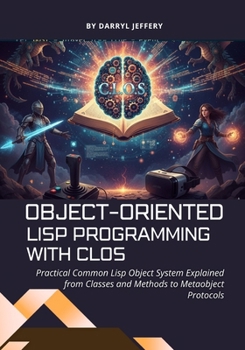
Object-Oriented Lisp Programming with CLOS: Practical Common Lisp Object System Explained from Classes and Methods to Metaobject Protocols

What if your Lisp programs could evolve at runtime, adapting to new requirements without a single reboot?
Object-Oriented Lisp Programming with CLOS introduces the Common Lisp Object System as the ultimate toolkit for building modular, adaptive software. Whether you're a seasoned Lisp hacker or transitioning from other OOP languages, this book shows you how to leverage CLOS's powerful features-from basic class definitions and multiple dispatch to advanced metaobject protocols-to write cleaner, more maintainable code. You'll learn how to structure applications around behavior rather than data, layer cross-cutting concerns gracefully, and redefine system behavior on the fly. Readers gain practical skills for real-world projects in AI, simulation, plugin architectures, and beyond.What Sets This Book Apart?
You won't just read theory-you'll follow a clear roadmap through twelve hands-on chapters, each packed with code you can run in your REPL immediately:
Understanding the Foundations of CLOS - Origins and principles that distinguish CLOS from other OOP systems
Classes, Instances, and Slots - Crafting robust class hierarchies and slot options
Working with Generic Functions - Multiple dispatch and behavior-driven design
Defining and Using Methods - Parameter specialization, dynamic redefinition, and method combinations
Multiple Inheritance and Class Precedence - Combining mixins safely with a predictable precedence list
Multiple Dispatch in Practice - Real-world multi-argument methods for simulation and messaging
Method Combinations and Cooperative Behavior - Layering: before: after, and: around methods for logging, transactions, and more
Metaobject Protocol Fundamentals - Reflective tools to inspect and customize your object system
Building Adaptive Systems with MOP - Custom metaclasses, slot behavior, and self-extending frameworks
Integrating CLOS into Modern Lisp Applications - Blending functional, procedural, and object paradigms in AI and knowledge systems
Debugging, Introspection, and Optimization - REPL-driven troubleshooting and performance tuning
Real-World CLOS Design Patterns - Observer, Strategy, plugin architectures, and hierarchical interactions
Each chapter offers expert insights drawn from production-scale Lisp projects, ensuring you'll finish not just knowledgeable, but productive.
Ready to transform your Lisp development with CLOS's unmatched flexibility? Grab your copy of Object-Oriented Lisp Programming with CLOS today and start building dynamic, resilient applications that evolve as fast as your ideas.Customer Reviews
ThriftBooks ® and the ThriftBooks ® logo are registered trademarks of Thrift Books Global, LLC
