


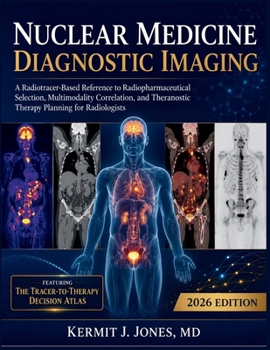
Nuclear Medicine Diagnostic Imaging 2026: A Radiotracer-Based Reference to Radiopharmaceutical Selection, Multimodality Correlation, and Theranostic T

Built for radiologists, nuclear medicine physicians, and advanced trainees, this reference connects radiotracer physiology to the imaging decisions that drive diagnosis, staging, correlation, and targeted radionuclide therapy planning. It moves from decay physics, biodistribution, PET/CT, SPECT/CT, artifacts, and radiation safety into organ-system and oncologic applications where tracer selection determines what the scan can prove. The book's central framework, The Tracer-to-Therapy Decision Atlas, translates uptake patterns into clinical action across diagnostic imaging and theranostic pathways.
- Select radiopharmaceuticals by clinical question - using tracer mechanism, normal biodistribution, clearance pathway, and modality match instead of habit.
- Interpret PET/CT and SPECT/CT with pitfall control - separating physiologic uptake, inflammation, misregistration, attenuation correction error, urinary activity, and treatment effect from true disease.
- Stage and restage malignancy with tracer-specific logic - applying FDG, PSMA, DOTATATE, MIBG, and radioiodine pathways to oncology, unknown primary workups, prostate cancer, neuroendocrine tumors, and thyroid cancer.
- Link diagnostic uptake to therapy planning - evaluating Lu-177 DOTATATE, Lu-177 PSMA, I-131, Y-90, and MIBG pathways through target expression, discordant lesions, post-therapy imaging, and organs at risk.
- Read endocrine, cardiac, pulmonary, renal, GI, infection, lymphatic, skeletal, pediatric, and CNS studies - turning functional imaging patterns into actionable reports.
- Report with management consequence - using structured reasoning that identifies what the tracer shows, what it cannot show, what could mimic disease, and what decision follows.
Add it to your nuclear medicine shelf when tracer choice, hybrid correlation, and therapy planning need to converge in one clinically usable reference.
Customer Reviews
ThriftBooks ® and the ThriftBooks ® logo are registered trademarks of Thrift Books Global, LLC
