


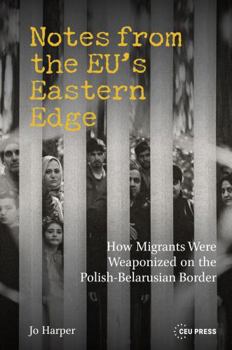
Notes from the Eu's Eastern Edge: How Migrants Were Weaponized on the Polish-Belarusian Border

Notes from the EU's Eastern Edge is a bold, singular book--auto-ethnography with analytic bite, theoretically literate without scholasticism, and ethically self-aware. Along the Belarus-Poland frontier, it shows how Kremlin "migration engineering" met a ready-made European script of fear, pride, and denial. In border forests--and in newsrooms, museums, classrooms--it traces how memory politics and securitized compassion turn migrants into symbols, while bilingual gatekeepers launder hard edges into "responsible" discourse. The book's core contribution is to shift Polish-populism studies from monist typologies to a processual account of a dialectical, polycentric regime of managed antagonisms--refusing the easy pejorative of "populism" and retaining an emancipatory horizon. Vivid reportage sits with compact documentary mini-cases to show how trauma, sovereignty and solidarity are being rewritten at Europe's edge. Definitive for debates on borders, memory and the political unconscious in Central Europe.
Customer Reviews
ThriftBooks® and the ThriftBooks® logo are registered trademarks of Thrift Books Global, LLC
