


Northern Wei
No Customer Reviews

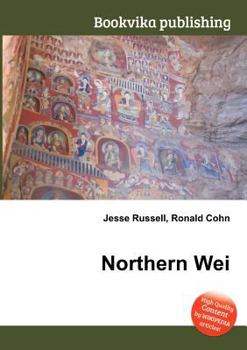
High Quality Content by WIKIPEDIA articles The Northern Wei Dynasty (Chinese: 北魏朝; pinyin: Běi W i Ch o), also known as the Tuoba Wei (拓拔魏), Later Wei (後魏), or Yuan Wei (元魏), was a dynasty which ruled northern China from 386 to 534 (de jure until 535). It has been described as "part of an era of political turbulence and intense social and cultural change." It is perhaps most noted for the unification of northern China in 439, but was also a period when foreign ideas were introduced, and Buddhism became firmly established. Many antiques and art works, both Daoist and Buddhist, from this period have survived. During the Taihe period under the Emperor Xiaowen, court advisers instituted sweeping reforms and introduced changes that eventually led in 494 AD to the dynasty moving its capital from Datong to Luoyang. It was the time of the construction of the Buddhist cave sites of Yungang by Datong during the mid-to-late 5th century, and towards the latter part of the dynasty, the Longmen Caves outside the later capital city of Luoyang, in which more than 30,000 Buddhist images from the time of this dynasty have been found. It is thought the dynasty originated from the Tuoba clan of the Xianbei tribe. The Tuoba renamed themselves the Yuan as a part of systematic Sinicization. Towards the end of the dynasty there was significant internal dissension resulting in a split into Eastern Wei Dynasty and Western Wei Dynasty.
Format:Paperback
Language:English
ISBN:5511303526
ISBN13:9785511303529
Release Date:January 1
Publisher:Book on Demand Ltd.
Length:136 Pages
Weight:0.38 lbs.
Dimensions:0.3" x 5.8" x 8.3"
Customer Reviews
0 rating
Copyright © 2026 Thriftbooks.com
Terms of Use | Privacy Policy | Do Not Sell/Share My Personal Information | Cookie Policy | Cookie Preferences | Accessibility Statement
ThriftBooks ® and the ThriftBooks ® logo are registered trademarks of Thrift Books Global, LLC
ThriftBooks ® and the ThriftBooks ® logo are registered trademarks of Thrift Books Global, LLC
