


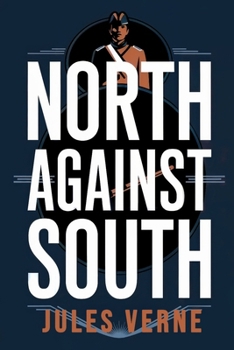
North Against South: A New Translation

A Florida plantation owner who opposes slavery. A ruthless Confederate who wants him destroyed. And a nation tearing itself apart.
James Burbank owns Camdless-Bay plantation in Civil War Florida, but unlike his neighbors, he opposes slavery and supports the Union despite living in Confederate territory. His principled stance makes him a target for Texar, a villainous Confederate supporter whose hatred and greed drive him to persecute Burbank's family through the war's chaos.
As the conflict between North and South rages, Burbank must protect his family from Texar's schemes while remaining true to his convictions in hostile territory. The personal vendetta between these two men becomes a microcosm of the broader national divide.
Jules Verne wrote North Against South in 1887 with genuine anti-slavery convictions-he condemned the institution unequivocally and celebrated Union victory as triumph of justice. Yet his good intentions cannot overcome fundamental limitations: he never visited the American South, worked entirely from European sources, and produced characterization so thin that complex historical actors become melodramatic types. Burbank is entirely noble, Texar is entirely evil, and African American characters exist primarily as objects of white benevolence rather than as subjects with agency.
The novel demonstrates how even progressive political positions don't automatically translate into sophisticated literature. Verne's opposition to slavery is clear, but his understanding of how it functioned, how the Civil War unfolded, and how African Americans experienced both institution and conflict remains superficial. He reduces complex historical tragedy to conventional adventure melodrama.
Modern readers will find the treatment of race deeply problematic despite anti-slavery stance-the paternalism that assumes white guidance is necessary, the denial of African American agency and complex subjectivity, the failure to engage genuinely with enslaved people's perspectives.
From the author of Twenty Thousand Leagues Under the Sea-well-intentioned but deeply flawed engagement with American slavery and Civil War.
Customer Reviews
ThriftBooks ® and the ThriftBooks ® logo are registered trademarks of Thrift Books Global, LLC
