


Normal morphology and developmental anomalies in dentition
No Customer Reviews

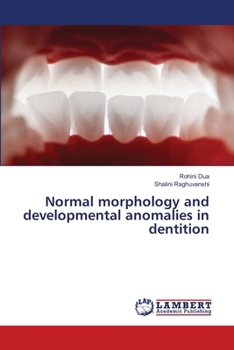
Developmental anomalies of teeth arise from disturbances during odontogenesis due to genetic, systemic, environmental, or nutritional factors. Tooth development occurs through well-defined stages, and disruption at any stage can affect tooth number, size, shape, structure, or eruption. Structural anomalies include amelogenesis imperfecta, dentinogenesis imperfecta, enamel hypoplasia, and regional odontodysplasia, which impair enamel and dentin formation. Shape anomalies such as gemination, fusion, concrescence, dilaceration, dens invaginatus, dens evaginatus, talon cusp, enamel pearls, taurodontism, and odontomas result from altered morphodifferentiation. Anomalies of number and size include hyperdontia, hypodontia, oligodontia, anodontia, microdontia, and macrodontia, caused by initiation stage disturbances. Eruption anomalies include natal and neonatal teeth, delayed eruption, and ankylosis. These conditions can affect aesthetics, function, and occlusion, requiring accurate diagnosis and appropriate preventive, restorative, orthodontic, or surgical management.
Format:Paperback
Language:English
ISBN:6209458904
ISBN13:9786209458903
Release Date:March 2026
Publisher:LAP Lambert Academic Publishing
Length:220 Pages
Weight:0.66 lbs.
Dimensions:0.5" x 6.0" x 9.0"
Customer Reviews
0 rating
Copyright © 2026 Thriftbooks.com
Terms of Use | Privacy Policy | Do Not Sell/Share My Personal Information | Cookie Policy | Cookie Preferences | Accessibility Statement
ThriftBooks ® and the ThriftBooks ® logo are registered trademarks of Thrift Books Global, LLC
ThriftBooks ® and the ThriftBooks ® logo are registered trademarks of Thrift Books Global, LLC
