


Nora

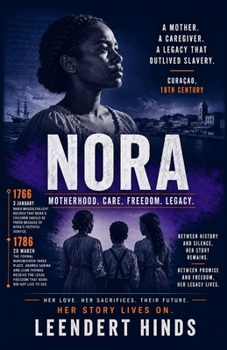
Nora is a biographical novel inspired by the life of an enslaved woman whose story survives in the historical record only in fragments-through her children, her work, her relationships, and a promise of freedom that took twenty years to become a legal reality. Nora was the mother of Andrea Sabina and Juan Thomas. She was also the wet nurse and later the carer who helped raise Clara Maria, the daughter of Maria Magdalena Levy, a free woman of mixed ancestry. Within the Levy household, Nora's life became intertwined with another generation, creating bonds of motherhood, care, duty, and dependence that reached far beyond the role imposed on her by slavery. On 3 January 1766, Maria Magdalena Levy decided that Nora's children should be freed in recognition of Nora's faithful service. Yet the promise was not immediately fulfilled. It was not until 28 March 1786 that their manumission was formally recorded. By then, both Nora and Maria Magdalena Levy were already dead.
Between these two dates lies the heart of this novel: the story of a woman whose voice was not preserved, but whose life can still be imagined through what the records reveal-and what they leave unanswered. Nora's story is both intimate and universal: a story of enslaved motherhood, sacrifice, care, loss, and the long, uncertain road towards freedom. The inspiration for Nora's story came from the book YAYA, written by Desire Jasmin Hooi-Martina, which describes the role that yayas have played for generations within their communities. After reading this book, I was inspired to learn more. I began searching for a yaya and a menchi, and that search ultimately led me to Nora. What history preserved is only a fragment. This novel gives that fragment a voice.
Customer Reviews
ThriftBooks ® and the ThriftBooks ® logo are registered trademarks of Thrift Books Global, LLC
