


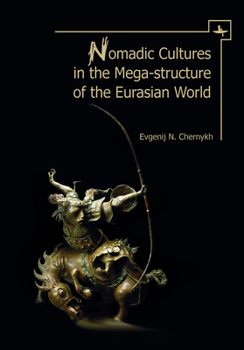
Nomadic Cultures in the Mega-Structure of the Eurasian World
No Customer Reviews

Select Format
Select Condition 
Book Overview
Two major dividing lines have formed the megastructure of Eurasia, determining the historical epochs of the continent's peoples. The first, vertical (longitudinal) line has separated East and West since the Paleolithic Age. The East was dominated by Mongol peoples speaking Sino -Tibetan, Manchu-Tungus, and Altaic languages. The Caucasoid peoples of the West spoke mostly Indo-European, Semite, and Finno-Ugric languages. The second line divided the continent horizontally (by latitude) into North and South. This division was closely connected with the Eurasian Steppe Belt. To the north of it lay the world of hunter-gatherers and fishermen. To the south, settled agriculture was dominant. The Steppe Belt itself was the domain of pastoralists, the nomadic and semi-nomadic herders. These lines converged at the entrance to the Great Silk Road. With the swift development of horse domestication and horseback riding, the nomads moved--from the Early Metal Age (500-400 BCE) to Genghis Khan's and the Genghisid's Great Empire (1200-1400 CE)--to the forefront of Eurasian history as their world became increasingly involved in dramatic and sometimes tragic relationships with their southern neighbors. This book focuses on the tangle of problems in these nomadic peoples' history.
Format:Paperback
Language:English
ISBN:1644696088
ISBN13:9781644696088
Release Date:May 2021
Publisher:Academic Studies Press
Length:696 Pages
Weight:2.40 lbs.
Dimensions:1.4" x 6.7" x 9.6"
Customer Reviews
0 rating
Copyright © 2026 Thriftbooks.com
Terms of Use | Privacy Policy | Do Not Sell/Share My Personal Information | Cookie Policy | Cookie Preferences | Accessibility Statement
ThriftBooks ® and the ThriftBooks ® logo are registered trademarks of Thrift Books Global, LLC
ThriftBooks ® and the ThriftBooks ® logo are registered trademarks of Thrift Books Global, LLC
