


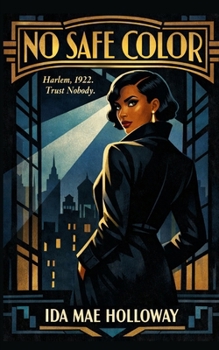
No Safe Color: A Harlem Renaissance Mystery

Harlem, 1922, hums with ambition. Brass spills from basement clubs and curls into the midnight air. Politicians stand beneath bright lights promising progress, while on Lenox Avenue men shake hands in public and settle scores in private.
Celia Mae Dupree works above it all, in a second floor office with no sign on the door. The people who find her have already been turned away somewhere else.
The missing carrier seems, at first, unremarkable. He is punctual. Careful. The sort of man who folds his coat the same way every evening. He leaves for work and does not return. His sister wants answers. The police offer sympathy and nothing more.
What Celia finds in a basement room miles from his route is not neglect, not accident, but design. The body is placed, not discarded. And there is something at the scene that does not fit. A detail too deliberate to ignore. A mark that suggests the man does not die for who he is, but for what he knows.
As Celia begins to ask the wrong questions, Harlem answers in silence. Conversations stop when she enters a room. Footsteps follow and then vanish. A warning arrives without a signature. One name drifts to the surface of every whispered account, a name spoken carefully, if at all.
The body is positioned with unsettling care. The air carries the stale patience of something planned. And there, among the ordinary details, sits one impossible thing. A mark placed with intention. A signature, perhaps. Or a warning.
The deeper she goes, the clearer it becomes: the carrier does not die by chance. He dies because he steps into something vast, something organized, something powerful enough to bend the truth.
No Safe Color is a dark crime mystery set in the restless heart of the Harlem Renaissance, where music masks menace and every truth uncovered threatens to expose something far more dangerous.
Customer Reviews
ThriftBooks ® and the ThriftBooks ® logo are registered trademarks of Thrift Books Global, LLC
