


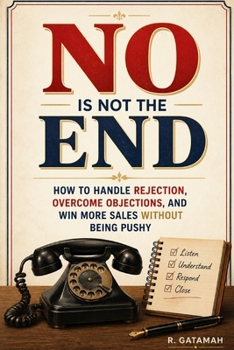
No Is Not the End: How To Handle Rejection And Overcome Objections

What do you do when a prospect says no?
For many salespeople, rejection feels like the end of the conversation-and sometimes like a judgment on their ability, confidence, or career. But a "no" is not always a final decision. Often, it is a signal that something remains unclear, unresolved, or unaddressed.
No Is Not the End offers a practical framework for understanding what prospects really mean when they push back, hesitate, object, or stop responding.
Inside, you'll learn how to:
Understand the real reasons prospects say noDistinguish genuine rejection from temporary resistanceRespond to objections without arguing or becoming defensiveHandle "too expensive" and other price objectionsRespond effectively when prospects say, "I need to think about it"Navigate prospects who are happy with their current supplierFollow up without becoming pushy or desperateAsk better questions that uncover the real concernRecognize when persistence is useful-and when it has become pesteringTurn rejection into useful information instead of personal disappointmentBuild emotional resilience and protect your confidenceKnow when to walk away while leaving the relationship intactUse a practical framework for handling common objectionsApply responses to 50 real-world objections using language you can adapt to your own styleThis is not a book about manipulating people into buying something they don't need. Its approach assumes that you have a genuinely valuable product or service and that your job is to create clarity, build trust, and help the right prospects make better decisions.
Whether you're making cold calls, running sales meetings, following up on proposals, negotiating price, or simply trying to become more confident in difficult conversations, this book gives you practical ways to stay calm, listen carefully, and move the conversation forward without being pushy.
Because sometimes no really does mean no.
But sometimes it means: ask a better question.
Customer Reviews
ThriftBooks ® and the ThriftBooks ® logo are registered trademarks of Thrift Books Global, LLC
