


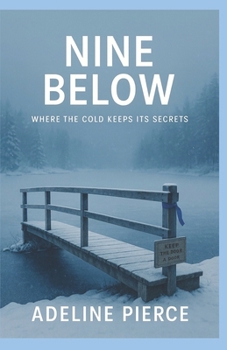
Nine Below: Where the cold keeps its secrets

Winter holds a small northern town in its precise, untheatrical grip. A bridge. A lake that would like to be legend. And a community that insists on nouns over miracles: rails, ropes, tea, a door that stays a door.
When a nine-second voicemail begins arriving at 2:09 a.m.-sometimes empty, sometimes a pencil scratch, sometimes a breath-producer Eva J nsd ttir returns home just as the message becomes linked to a death the town refuses to mythologize. No spectacle. No shrine. Just ice, routine, and questions that must be handled carefully.
Nine Below is a literary mystery of administration and ethics, as atmospheric as it is restrained. The radio's "rail"-a single broadcast line that airs each night at 2:09-becomes less a warning than a civic habit: I don't have to. From a community hall with chairs that finally don't squeak to a hand-lettered poster called the borrowed map (cones, windows, inside voices), the town learns how to make safety ordinary.
Tourists come and go. An app tries to sell a chorus. Officials arrive with notebooks. Meanwhile, the viaduct keeps its thin steel note, the fox refuses metaphor, and Eva works with small tools: brooms, bolts, lowercase signs, and the refusal to mic the wind.
As the voicemail begins to echo her own past, Eva must decide what to do with the nine seconds everyone wants explained-and whether to publish a manual, or let the town remain a room that doesn't need a mouth.
With prose as clear as winter air, Nine Below is a slow-burn, atmospheric novel about restraint over revelation, community over spectacle, and why dull, repeated kindness may be the rarest form of heroism.
Customer Reviews
ThriftBooks® and the ThriftBooks® logo are registered trademarks of Thrift Books Global, LLC
