


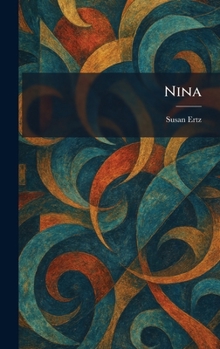
Nina

Select Format
Select Condition 
Book Overview
"Nina" is a compelling exploration of love, loyalty, and the complexities of the human heart in the aftermath of the Great War. Written by Susan Ertz, this novel centers on the life of Nina Hallam, a woman whose profound devotion to Morton Caldwell defines her existence. As Nina navigates the social expectations of her era, she must grapple with the nature of a love that is both all-consuming and fraught with challenges. Ertz masterfully portrays the psychological depths of her characters, contrasting Nina's steadfast nature with Morton's more mercurial personality.
Set against the backdrop of 1920s English society, "Nina" captures the shifting values of a generation seeking stability and meaning in a changing world. The narrative delves into the intricacies of marriage and the sacrifices made in the name of affection, offering a nuanced look at domestic life and personal identity. Through evocative prose and sharp social observation, the work examines whether selfless love is a virtue or a burden. "Nina" remains a significant example of early twentieth-century women's fiction, highlighting the emotional landscapes and societal constraints faced by women of the period. This novel is a rich character study that reflects the manners and morals of the post-war years.
This work has been selected by scholars as being culturally important, and is part of the knowledge base of civilization as we know it. This work was reproduced from the original artifact, and remains as true to the original work as possible. Therefore, you may see the original copyright references, library stamps (as most of these works have been housed in our most important libraries around the world), and other notations in the work.
This work is in the public domain in the United States of America, and possibly other nations. Within the United States, you may freely copy and distribute this work, as no entity (individual or corporate) has a copyright on the body of the work.
As a reproduction of a historical artifact, this work may contain missing or blurred pages, poor pictures, errant marks, etc. Scholars believe, and we concur, that this work is important enough to be preserved, reproduced, and made generally available to the public. We appreciate your support of the preservation process, and thank you for being an important part of keeping this knowledge alive and relevant.
Customer Reviews
ThriftBooks ® and the ThriftBooks ® logo are registered trademarks of Thrift Books Global, LLC
