


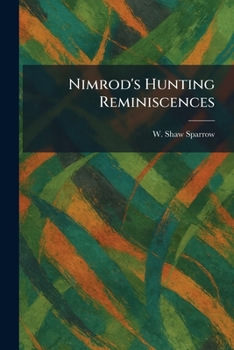
Nimrod's Hunting Reminiscences

"Nimrod's Hunting Reminiscences" is a classic collection of essays and recollections that captures the vibrant spirit of English fox hunting during its golden age. Written by the renowned sporting journalist Charles James Apperley, better known by his pseudonym "Nimrod," this work offers an immersive look into the traditions, characters, and landscapes of the 19th-century hunt. The book serves as a historical chronicle of the pursuit, detailing the skill of the riders, the prowess of the hounds, and the social fabric of the British countryside.
With expert commentary and vivid anecdotes, "Nimrod's Hunting Reminiscences" provides readers with technical insights into equestrianism and the nuances of the chase. The text explores the evolution of the sport, profiling famous huntsmen and legendary runs across the English shires. This volume stands as a testament to the literary and cultural significance of field sports in British history, preserving the legacy of a bygone era for modern enthusiasts of hunting and equestrian history. Through its detailed accounts of hard-riding adventures and country life, the work remains an essential piece of sporting literature, celebrating the enduring bond between horse and rider.
This work has been selected by scholars as being culturally important, and is part of the knowledge base of civilization as we know it. This work was reproduced from the original artifact, and remains as true to the original work as possible. Therefore, you may see the original copyright references, library stamps (as most of these works have been housed in our most important libraries around the world), and other notations in the work.
This work is in the public domain in the United States of America, and possibly other nations. Within the United States, you may freely copy and distribute this work, as no entity (individual or corporate) has a copyright on the body of the work.
As a reproduction of a historical artifact, this work may contain missing or blurred pages, poor pictures, errant marks, etc. Scholars believe, and we concur, that this work is important enough to be preserved, reproduced, and made generally available to the public. We appreciate your support of the preservation process, and thank you for being an important part of keeping this knowledge alive and relevant.
Customer Reviews
ThriftBooks ® and the ThriftBooks ® logo are registered trademarks of Thrift Books Global, LLC
