


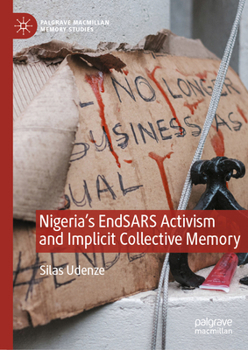
Nigeria's Endsars Activism and Implicit Collective Memory

This pioneering book delivers a foremost in-depth study of the protest against the Nigerian Police's Special Anti-Robbery Squad (SARS) from the perspective of memory studies. Blending scholarly insight with personal experience, the author, both a researcher and a front-line participant in the protest, offers a rare, insider-informed perspective. The book interrogates how protesters constructed diverse memory practices and mobilized digital platforms such as Instagram and WhatsApp to organize, document, and sustain resistance. Moving beyond the immediate trigger of the protest, the book uncovers dire conditions that ignited the protest: youth unemployment, poverty, entrenched public-sector corruption, and perennial police brutality. These interlocking challenges form what the author terms an implicit collective memory, the shared socio-economic trauma that formed the underlying catalyst of the EndSARS movement. Interdisciplinary, urgent, and deeply grounded in the lived realities of the Global Majority, this book offers an essential contribution to the study of activism, digital resistance, and collective memory.
Customer Reviews
ThriftBooks ® and the ThriftBooks ® logo are registered trademarks of Thrift Books Global, LLC
