


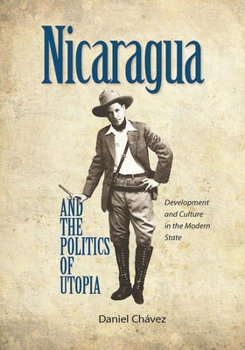
Nicaragua and the Politics of Utopia: Development and Culture in the Modern State
No Customer Reviews

The history of modern Nicaragua is populated with leaders promising a new and better day. Inevitably, as Nicaragua and the Politics of Utopia demonstrates, reality casts a shadow and the community must look to the next leader. As an impoverished state, second only to Haiti in the Americas, Nicaragua has been the scene of cyclical attempts and failures at modern development. Author Daniel Chavez investigates the cultural and ideological bases of what he identifies as the three decisive movements of social reinvention in Nicaragua: the regimes of the Somoza family of much of the early to mid-twentieth century; the governments of the Sandinista party; and the present day struggle to adapt to the global market economy.
For each era, Chavez reveals the ways Nicaraguan popular culture adapted and interpreted the new political order, shaping, critiquing, or amplifying the regime's message of stability and prosperity for the people. These tactics of interpretation, otherwise known as meaning-making, became all-important for the Nicaraguan people, as they opposed the autocracy of Somocismo, or complemented the Sandinistas, or struggled to find their place in the Neoliberal era. In every case, Chavez shows the reflective nature of cultural production and its pursuit of utopian idealism.
Format:Hardcover
Language:English
ISBN:0826520472
ISBN13:9780826520470
Release Date:December 2015
Publisher:Vanderbilt University Press
Length:376 Pages
Weight:2.00 lbs.
Dimensions:1.2" x 6.9" x 10.1"
Customer Reviews
0 rating
Copyright © 2026 Thriftbooks.com Terms of Use
| Privacy Policy | Do Not
Sell/Share My Personal Information | Cookie Policy | Cookie Preferences | Accessibility Statement
ThriftBooks® and the ThriftBooks® logo are registered trademarks of Thrift Books Global, LLC
ThriftBooks® and the ThriftBooks® logo are registered trademarks of Thrift Books Global, LLC
