


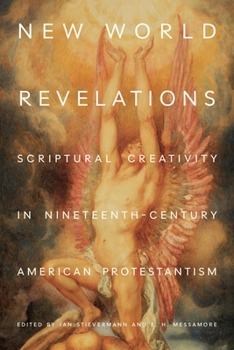
New World Revelations: Scriptural Creativity in Nineteenth-Century American Protestantism

New revelations and alternative bibles proliferated in nineteenth-century America, opening up spiritual worlds on a grand scale. The Book of Mormon is the best-known example, but it was only part of a much richer story of US scriptural production and engagement, which includes writings from a diverse array of American religious movements, the translation and reception of Asian religious texts, and literary works imbued with sacred meaning.
This collection of essays explores that broader story, bringing together comparative and theoretically informed analyses of newly created or "discovered" scriptures. In addition to examining revelations canonized by well-known Protestant denominations, contributions expand the conversation to consider scriptural writings ranging from Emily Dickinson's prophetic poetry and the apocryphal testimonies of German Inspirationists to Kiikaapoi syncretic scripture-making, the Holy Koran of the Moorish Science Temple of America, and Christian engagements with Sanskrit and Shinto sacred texts. Bringing these diverse nineteenth-century American revelations into conversation across disciplinary boundaries, the volume invites readers to complicate the very assumptions that undergird the terms "scripture" and "scripturalization" in the field.
By bridging fields too often studied separately, this collection offers a fresh framework for understanding scripture, revelation, and religious innovation in the United States. It will interest scholars and students of American religion, religious history, literature, and new religious movements.
Customer Reviews
ThriftBooks ® and the ThriftBooks ® logo are registered trademarks of Thrift Books Global, LLC
