


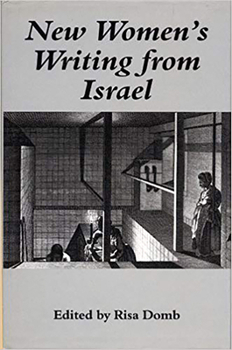
New Women's Writing from Israel


This anthology of short stories reflects the wide range of subjects and styles written by Israeli women today. The change in the mainstream Israeli experience in the 1970s has brought about a greater openness in literature, and a plurality of voicesincluding those of women - has emerged. The shift of marginal characters to the centre stage in Israeli fiction, as well as a departure from male-oriented national concerns, has opened the doors to an influx of women writers.
These stories, most of which have been specially translated for this anthology, represent the exciting writing emerging from Israel. The form of the short story still holds an important place in the development of Hebrew literature, and this collection reflects not only specific themes such as the Holocaust and the relationship between Arabs and Jews, but also the universal human preoccupations of death, love, betrayal and isolation, all of which transcend the boundaries of regional interests.
These stories, most of which have been specially translated for this anthology, represent the exciting writing emerging from Israel. The form of the short story still holds an important place in the development of Hebrew literature, and this collection reflects not only specific themes such as the Holocaust and the relationship between Arabs and Jews, but also the universal human preoccupations of death, love, betrayal and isolation, all of which transcend the boundaries of regional interests.
Format:Paperback
Language:English
ISBN:0853033080
ISBN13:9780853033080
Release Date:July 1996
Publisher:Vallentine Mitchell
Length:228 Pages
Weight:1.60 lbs.
Customer Reviews
1 rating
Haunted by the Past
Published by Thriftbooks.com User , 23 years ago
Risa Domb's "New Women's Writing from Israel" is interesting in that it gives a totally different view of Jewishness than contemporary anthologies giving these authors' diaspora counterparts. The Jews of this collection are not necessarily practising but, living though they do on a secularised Holy Land, they cannot seem to get away from the sacred unscathed to the profane. This would perhaps be the editor's bias but all she notes is that the tendency of the Israeli literature, in its inception at the hands of the only literarily trained group - men, was political and ideological. The new generation of women writers whom she seeks to represent reside in the apolitical, she says. Yet the opening story, Leah Aini's "Until the Entire Guard Has Passed", combines a diaristic portrait of domestic life and neighbourhood politics - the store keepers' poker game -with an abiding, brooding and inescapable sense of menace drawing back to the holocaust, which haunts the pregnant wife of the protagonist. And in each story that follows death, spiritual, emotional or physical is a presence - it is as if these Jews are not necessarily counting their mitzvot but they must safeguard their souls - these are not casual stones they walk upon and their smallest emotional exchanges have a consequence. Nor is this merely a result of the gender of the authors in this anthology - (the stories by women in an American anthology "The Slow Mirror" are no more God-fearing than those of the men) - the new Israeli women writers are God-fearing in the sense that those true believers in the early U.S. puritan days were - they are aware of the ever present possibility of sin.And that, perhaps, is a definition of the Jewish voice, in its collective, cross national parameters. Not the fantastic parables of terror in Kafka, nor the nuances of Jewish detail in the lives of all but religionless present day drifters about the secular world, but a sense in which the Jews remain even now as their great forefathers were - courting the shifting paths of the desert with an uneasy and difficult to cast off burden of law.
Copyright © 2026 Thriftbooks.com
Terms of Use | Privacy Policy | Do Not Sell/Share My Personal Information | Cookie Policy | Cookie Preferences | Accessibility Statement
ThriftBooks ® and the ThriftBooks ® logo are registered trademarks of Thrift Books Global, LLC
ThriftBooks ® and the ThriftBooks ® logo are registered trademarks of Thrift Books Global, LLC
