


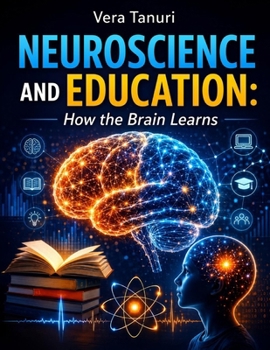
Neuroscience and Education: How the Brain Learns

Have you ever wondered how the brain really learns?
Brain science has revolutionized our understanding of learning, memory, attention, and motivation. Today, we know that learning is far more than simply memorizing information-it is a complex process involving neural networks, emotions, experiences, and brain plasticity.
In Neuroscience and Education: How the Brain Learns, you will discover, through a clear and evidence-based approach, how advances in neuroscience can transform the way we teach and learn.
This book presents an accessible yet scientifically grounded exploration of the key brain mechanisms involved in learning, connecting discoveries from cognitive neuroscience with practical applications in education.
Throughout the book, you will learn:
- How the brain functions during learning
- The role of memory and attention in the learning process
- How emotions influence learning and academic performance
- What brain plasticity is and how it enhances knowledge acquisition
- How executive functions and critical thinking can be developed
- Science-based strategies for improving teaching and learning
Drawing on scientific research and the work of leading neuroscientists, this book builds a bridge between neuroscience and educational practice, demonstrating how a deeper understanding of the brain can transform education.
Whether you are an educator, student, researcher, parent, or simply curious about how learning works, this book offers valuable insights into the fascinating relationship between the brain and education.
If you want to understand how the brain learns, improve memory and concentration, and make teaching and learning more effective, this book is essential reading.
Customer Reviews
ThriftBooks ® and the ThriftBooks ® logo are registered trademarks of Thrift Books Global, LLC
