


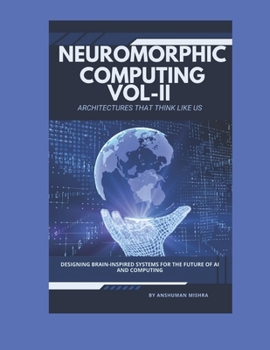
Neuromorphic Computing: Architectures That Think Like Us VOL-II: Designing Brain-Inspired Systems for the Future of AI and Computing
No Customer Reviews

Preface
In the ever-evolving landscape of artificial intelligence and computing, neuromorphic computing stands as a beacon of innovation, promising a paradigm shift in how we design and build intelligent machines. For decades, the conventional Von Neumann architecture, while powerful, has grappled with the inherent limitations of separating processing and memory, leading to the infamous "memory wall." Meanwhile, the human brain, an organ of unparalleled complexity and efficiency, effortlessly processes vast amounts of information with remarkable speed and minimal energy consumption. Neuromorphic computing seeks to bridge this gap, drawing profound inspiration from the brain's intricate structure and function to create systems that are not just faster, but fundamentally smarter and more energy-efficient.
Purpose of the Book
The primary purpose of "Neuromorphic Computing: Architectures That Think Like Us" is to demystify this exciting and rapidly advancing field. We aim to provide a comprehensive and accessible exploration of neuromorphic computing, from its biological underpinnings to its cutting-edge hardware implementations and diverse applications. This book is designed to serve as a foundational guide for understanding the core principles, the technological advancements, and the immense potential of brain-inspired systems. We will delve into how these architectures are designed to overcome the limitations of traditional computing, enabling new frontiers in AI, robotics, and cognitive modeling. Ultimately, our goal is to empower readers with the knowledge to grasp the significance of this revolution and to contribute to its future.
Who Should Read This Book
This book is tailored for a diverse audience, including: Students and Researchers in computer science, electrical engineering, neuroscience, and artificial intelligence who are looking to understand the fundamentals and latest advancements in neuromorphic computing.Engineers and Developers interested in designing and programming brain-inspired hardware and software for real-world applications.AI Practitioners and Enthusiasts curious about the next generation of artificial intelligence and how biological principles are shaping its evolution.Anyone with a keen interest in the intersection of biology, technology, and the future of intelligent systems. Whether you are a seasoned expert or new to the field, this book offers valuable insights and practical knowledge.How to Use This Book
This book is structured to guide you through the complexities of neuromorphic computing in a logical and progressive manner: Part I: Foundations of Neuromorphic Computing lays the groundwork by introducing the core concepts, historical context, and the biological inspirations behind neuromorphic architectures. If you're new to the subject, start here to build a strong conceptual understanding.Part II: Hardware Architectures and Technologies dives deep into the silicon, exploring the leading neuromorphic chips and the emerging technologies that are making these brain-inspired systems a reality. This section is crucial for understanding the physical manifestation of neuromorphic principles.Part III: Algorithms and Learning Mechanisms focuses on the software side, detailing the learning rules and programming frameworks that enable neuromorphic systems to learn and adapt. For those looking to work with or develop for these systems, this part offers essential practical insights.Part IV: Applications and Case Studies showcases the diverse and impactful uses of neuromorphic computing across various domains, from computer vision to robotics and cognitive modeling. These chapters provide real-world context and inspiration.
In the ever-evolving landscape of artificial intelligence and computing, neuromorphic computing stands as a beacon of innovation, promising a paradigm shift in how we design and build intelligent machines. For decades, the conventional Von Neumann architecture, while powerful, has grappled with the inherent limitations of separating processing and memory, leading to the infamous "memory wall." Meanwhile, the human brain, an organ of unparalleled complexity and efficiency, effortlessly processes vast amounts of information with remarkable speed and minimal energy consumption. Neuromorphic computing seeks to bridge this gap, drawing profound inspiration from the brain's intricate structure and function to create systems that are not just faster, but fundamentally smarter and more energy-efficient.
Purpose of the Book
The primary purpose of "Neuromorphic Computing: Architectures That Think Like Us" is to demystify this exciting and rapidly advancing field. We aim to provide a comprehensive and accessible exploration of neuromorphic computing, from its biological underpinnings to its cutting-edge hardware implementations and diverse applications. This book is designed to serve as a foundational guide for understanding the core principles, the technological advancements, and the immense potential of brain-inspired systems. We will delve into how these architectures are designed to overcome the limitations of traditional computing, enabling new frontiers in AI, robotics, and cognitive modeling. Ultimately, our goal is to empower readers with the knowledge to grasp the significance of this revolution and to contribute to its future.
Who Should Read This Book
This book is tailored for a diverse audience, including: Students and Researchers in computer science, electrical engineering, neuroscience, and artificial intelligence who are looking to understand the fundamentals and latest advancements in neuromorphic computing.Engineers and Developers interested in designing and programming brain-inspired hardware and software for real-world applications.AI Practitioners and Enthusiasts curious about the next generation of artificial intelligence and how biological principles are shaping its evolution.Anyone with a keen interest in the intersection of biology, technology, and the future of intelligent systems. Whether you are a seasoned expert or new to the field, this book offers valuable insights and practical knowledge.How to Use This Book
This book is structured to guide you through the complexities of neuromorphic computing in a logical and progressive manner: Part I: Foundations of Neuromorphic Computing lays the groundwork by introducing the core concepts, historical context, and the biological inspirations behind neuromorphic architectures. If you're new to the subject, start here to build a strong conceptual understanding.Part II: Hardware Architectures and Technologies dives deep into the silicon, exploring the leading neuromorphic chips and the emerging technologies that are making these brain-inspired systems a reality. This section is crucial for understanding the physical manifestation of neuromorphic principles.Part III: Algorithms and Learning Mechanisms focuses on the software side, detailing the learning rules and programming frameworks that enable neuromorphic systems to learn and adapt. For those looking to work with or develop for these systems, this part offers essential practical insights.Part IV: Applications and Case Studies showcases the diverse and impactful uses of neuromorphic computing across various domains, from computer vision to robotics and cognitive modeling. These chapters provide real-world context and inspiration.
Format:Paperback
Language:English
ISBN:B0F9P8VYLD
ISBN13:9798284910283
Release Date:May 2025
Publisher:Independently Published
Length:356 Pages
Weight:1.82 lbs.
Dimensions:0.7" x 8.5" x 11.0"
Customer Reviews
0 rating
Copyright © 2026 Thriftbooks.com Terms of Use
| Privacy Policy | Do Not
Sell/Share My Personal Information | Cookie Policy | Cookie Preferences | Accessibility Statement
ThriftBooks® and the ThriftBooks® logo are registered trademarks of Thrift Books Global, LLC
ThriftBooks® and the ThriftBooks® logo are registered trademarks of Thrift Books Global, LLC
