


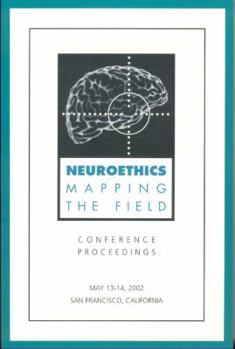
Neuroethics: Mapping the Field


This volume contains the proceedings of a two-day multidisciplinary conference on the ethical implications of brain research organized by Stanford University and the University of California, San... This description may be from another edition of this product.
Format:Paperback
Language:English
ISBN:097238300X
ISBN13:9780972383004
Release Date:September 2004
Publisher:Dana Press
Length:367 Pages
Weight:1.40 lbs.
Dimensions:1.0" x 6.4" x 9.0"
Customer Reviews
1 rating
Introduction to the ethics of the twenty-first century
Published by Thriftbooks.com User , 19 years ago
Does current research in neuroscience negate the concept of free will? If it does, can we hold criminals liable for their actions? Would it be proper to give our children drugs that enhance their cognitive abilities, in order that they become better performers in school? Should those who do not have visual or auditory impairments use devices designed to assist the blind or the deaf in order to enhance their visual and auditory capabilities? Should the brain be altered using either pharmacological drugs or artificial devices in order to increase its capabilities? These questions, and many more, are addressed in this book by some well-known researchers in neuroscience, neurophilosophy, and cognitive neuroscience. Readers who are interested in these issues can gain a lot from the book, even though the discussions are at times somewhat hurried and the presentation informal. The book consists of conference proceedings consisting of lectures with Q & A that was sponsored by the Dana Foundation and chaired by William Safire, a former Op-Ed columnist of the New York Times. Neuroethics, at least as it is viewed in this book, addresses the legalities and ethics of brain modification or enhancement. It attempts to answer whether scientists or society as a whole, should allow these modifications and enhancements. It assumes, usually implicitly, that there are meaningful and objective ethical criteria for assessing these questions. The technological capabilities at the present time for brain enhancement are miniscule compared to what will be available in the coming decades. Therefore it seems appropriate to get a head start on the complex legal and moral issues that are involved. All of the speakers who are represented in this book give interesting insights on these issues, and when reading the words of some of them one can clearly see a sense of foreboding. But there is a different concept of neuroethics that is inspired to some extent by the content of this book (and others like it) but not always explicitly recognized. This conceptualization of neuroethics makes note of the experimental techniques now available to study the processes in the brain, and recognizes that much can be said about the brain that could not be said twenty years ago. Many new insights into the functioning of the brain have given cognitive neuroscientists the ability to study human decision-making and planning in ways that shed considerable light on human behavior. And from these studies, it is readily apparent that any viable system of ethics must conform to what the brain can actually do. It does not make sense to require a certain type of conduct if the systems in the brain are not compatible with this conduct. Neuroscience will thus offer constraints on any code of ethics. Neuroethics then is a scientific approach to ethics, that places emphasis on how the brain makes decisions and what kinds of behavior are compatible with brain functioning. Historically, ethical thought
Copyright © 2025 Thriftbooks.com
Terms of Use | Privacy Policy | Do Not Sell/Share My Personal Information | Cookie Policy | Cookie Preferences | Accessibility Statement
ThriftBooks ® and the ThriftBooks ® logo are registered trademarks of Thrift Books Global, LLC
ThriftBooks ® and the ThriftBooks ® logo are registered trademarks of Thrift Books Global, LLC
