


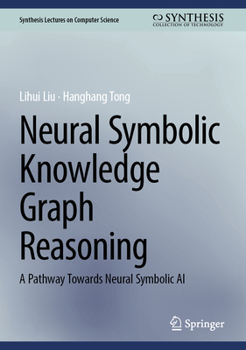
Neural Symbolic Knowledge Graph Reasoning: A Pathway Towards Neural Symbolic AI

This book explores various aspects of knowledge graph reasoning to solve different tasks, encompassing first, traditional symbolic methods for knowledge graph reasoning; second, recent developments in neural-based knowledge graph reasoning techniques; and third, cutting-edge advancements in neural-symbolic hybrid approaches to knowledge graph reasoning. The authors focus on the model and algorithm design aspect and study knowledge graphs from two perspectives: background knowledge graph and input query. Knowledge graph reasoning, which aims to infer and discover new knowledge from existing information in the knowledge graph, has played an important role in many real-world applications, such as question answering and recommender systems. A new trend in knowledge graph reasoning is the combination of neural models with symbolic knowledge graphs, allowing for the design of models that are not only efficient and accurate, but also interpretable. In this book, the authors study the application of neural-symbolic knowledge reasoning to different tasks from two perspectives: the input query and the background knowledge graph.
Customer Reviews
ThriftBooks® and the ThriftBooks® logo are registered trademarks of Thrift Books Global, LLC
