


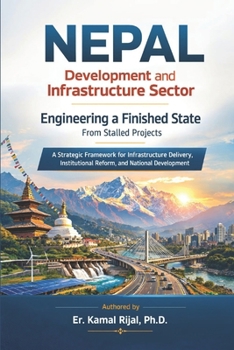
Nepal: DEVELOPMENT AND INFRASTRUCTURE SECTOR: Engineering a Finished State from Stalled Projects
No Customer Reviews

Nepal's future development will depend heavily on the performance of its infrastructure sector and governance institutions.
Transport networks, hydropower systems, irrigation infrastructure, urban services, and digital connectivity form the backbone of economic transformation. Yet these sectors often face delays, cost overruns, and institutional bottlenecks that limit their effectiveness.
This book examines why these challenges occur and how they can be addressed.
It argues that sustainable development requires the alignment of three critical pillars:
Infrastructure Hardware
The physical systems that support economic activity-roads, energy networks, water systems, and communication infrastructure.
Institutional Software
The governance systems, legal frameworks, and professional capacity required to plan, implement, and maintain these assets.
Financial Architecture
The mechanisms that mobilize and allocate capital for long-term development investment.
When these pillars operate in coordination, development systems function effectively. When they operate in isolation, progress becomes fragmented and unpredictable.
The book therefore proposes a shift from a Project State to a Delivery State-a governance system capable of consistently completing infrastructure investments and translating development plans into real outcomes.
Looking toward the year 2100, Nepal has the opportunity to transform itself from a country defined by unfinished potential into a nation recognized for the reliability of its institutions and the strength of its infrastructure systems.
The journey toward that future begins with a simple but powerful principle:
A nation that finishes its infrastructure builds its own prosperity.
Transport networks, hydropower systems, irrigation infrastructure, urban services, and digital connectivity form the backbone of economic transformation. Yet these sectors often face delays, cost overruns, and institutional bottlenecks that limit their effectiveness.
This book examines why these challenges occur and how they can be addressed.
It argues that sustainable development requires the alignment of three critical pillars:
Infrastructure Hardware
The physical systems that support economic activity-roads, energy networks, water systems, and communication infrastructure.
Institutional Software
The governance systems, legal frameworks, and professional capacity required to plan, implement, and maintain these assets.
Financial Architecture
The mechanisms that mobilize and allocate capital for long-term development investment.
When these pillars operate in coordination, development systems function effectively. When they operate in isolation, progress becomes fragmented and unpredictable.
The book therefore proposes a shift from a Project State to a Delivery State-a governance system capable of consistently completing infrastructure investments and translating development plans into real outcomes.
Looking toward the year 2100, Nepal has the opportunity to transform itself from a country defined by unfinished potential into a nation recognized for the reliability of its institutions and the strength of its infrastructure systems.
The journey toward that future begins with a simple but powerful principle:
A nation that finishes its infrastructure builds its own prosperity.
Format:Paperback
Language:English
ISBN:B0GSMHP5LR
ISBN13:9798252053356
Release Date:March 2026
Publisher:Independently Published
Length:262 Pages
Weight:0.78 lbs.
Dimensions:0.6" x 6.0" x 9.0"
Customer Reviews
0 rating
Copyright © 2026 Thriftbooks.com
Terms of Use | Privacy Policy | Do Not Sell/Share My Personal Information | Cookie Policy | Cookie Preferences | Accessibility Statement
ThriftBooks ® and the ThriftBooks ® logo are registered trademarks of Thrift Books Global, LLC
ThriftBooks ® and the ThriftBooks ® logo are registered trademarks of Thrift Books Global, LLC
