
Skip to content
Scan a barcode
Scan
Paperback Necropolis Book

ISBN: 1564786110

ISBN13: 9781564786111

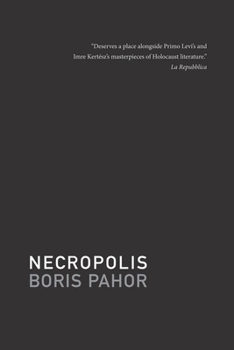
Necropolis

Select Format

Select Condition ThriftBooks Help Icon

Recommended

Format: Paperback

Condition: New

$13.69
Save $2.26!
List Price $15.95
Ships within 2-3 days
Save to List

Book Overview

Boris Pahor spent the last fourteen months of World War II as a prisoner and medic in the Nazi camps at Belsen, Harzungen, Dachau, and Natzweiler. His fellow prisoners comprised a veritable microcosm of Europe Italians, French, Russians, Dutch, Poles, Germans. Twenty years later, when he visits a camp in the Vosges Mountains that has been preserved as a historical monument, images of his experiences come back to him: corpses being carried to the ovens; emaciated prisoners in wooden clogs and ragged, zebra-striped uniforms, struggling up the steps of a quarry or standing at roll call in the cold rain; the infirmary, reeking of dysentery and death. Necropolis is Pahor s stirring account of his attempts to provide medical aid to prisoners in the face of the utter brutality of the camps and of his coming to terms with the ineradicable guilt he feels, having survived when millions did not.

Customer Reviews

2 ratings

Glittering phantasmagorical memoir of the horrors of the concentration camps

Natzweiler/ KLNa to the Nazis, one of the least discussed of the concentration camps, with its population of almost entirely non-Jewish inmates, and Jewish resistors not identified as Jewish, makes an important case study of revolt. For 25 years I have studied this camp and created a website as a guide to the resources that will open up a rich avenue of scholarship. In particular, the memoirs of Natzweiler-Struthof provide primary material for a serious exploration of the history of repression and resistance in the second World War. All the writers known to have written about Natzweiler belonged to a category which deserves to be studied far more extensively than it has been in the U.S.: they were resistors condemned under the NN -- "Nacht und Nebel" decree. From 1942 on, the KLNa was mostly dedicated to the incarceration and death of resistors. By 1943, Himmler decided to group all those arrested under this decree at Natzweiler. The phenomenon of opposition to the Nazis under many forms and guises is represented in these memoirs of Jews and non-Jews who actively participated in the destruction of the Third Reich, for the enduring honor of mankind. Boris Pahor, a non-Jew, has written the most "literary" of the existing more than two-dozen memoirs of NAtzweiler/Struthof /KLNA. Pahor, the author of some 15 books, deals with the guilt of the survivor, also a theme in his 1958 book, recently translated from the Slovene into French as Printemps Difficile (Difficult Spring)." He told an interviewer recently: "I only know how to describe the dying and the dead...After our return, thousands committed suicide....It was difficult to return. With the guilt of knowing that, if they are still living, it is because they ate dead men's bread....I write as if I was in the morgue." (Le Monde) This self-assessment undervalues the glittering attraction of his writing as he shifts the reader's attention between the living tourists and the dead victims (both the "Shadows" of the title), whom he sees and reaches out to during his days' and night's return to Natzweiler. Boris Pahor, born in Trieste, fought for national Slovene liberation in 1943 and was arrested and sent to Natzweiler as anti-German, anti-fascist. Pahor begins Pilgrim Among the Shadows, his account of his return to Natzweiler in 1966, by sharing his conflicted emotions. He at first resents the motorized procession of tourists "distorting the dreamlike images that have lived in the shadows of my mind ever since the war." "Their eyes will never see the abyss of desolation that was our punishment for believing in man's dignity and freedom." "At the same time I feel an unbidden and gently persistent satisfaction that this mountain in the Vosges is no longer the site of a distant, self-consuming fury of destruction; that it has become, instead, the destination of endless crowds which, naïve and guileless though they may be, are sincere in their wish to experience just a hint of the inconceivable

Hard to Read, Hard to Put Down

This is a unique Holocaust memoir -- a highly literary, poetic, deeply emotional look back at this Slovene medic's experiences in Natweiler and later Dachau, with stops at the tunnels where the V-1 and V-2s were built, and numerous other horrifying anecdotes along the way. The language of this novel is very personal, and as a medic it is true Mr. Pahor was treated mildly better than some of the patients, and yet, because his view was often as an observer, he suffered greatly by what he saw and did, and by the horrific deaths of those he sought to help and comfort. An unforgettable memoir that is hard to read, and yet hard to stop reading.
Copyright © 2026 Thriftbooks.com Terms of Use | Privacy Policy | Do Not Sell/Share My Personal Information | Cookie Policy | Cookie Preferences | Accessibility Statement
ThriftBooks® and the ThriftBooks® logo are registered trademarks of Thrift Books Global, LLC

GoDaddy Verified and Secured