


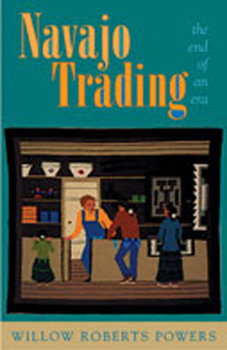
Navajo Trading the End of an Era

Select Format
Select Condition 
Book Overview
Beginning in the 1870s peddlers began to travel by wagon onto the Navajo Reservation to barter their wares for wool, a few sheep, a rug, or a piece of silver jewelry. By the early years of the twentieth century, barter developed into an exchange of culture and services: in addition to serving as a place where Navajo jewelry and rugs changed hands, trading posts acted as grocery stores, banks, post offices, and railroad hiring offices. Traders were the link between Anglo-American culture and the Navajo people. At first agents of change, by 1950 they had become maintainers of tradition and hence obstacles to modernization. Today, at the dawn of the twenty-first century, trading posts are obsolete. This overview of Navajo trading is the first to examine trading in the last quarter of the twentieth century, when changes in both cultures led to the investigation of trading practices by the Federal Trade Commission, ultimately resulting in the demise of most traditional trading posts. Based on archival research and on interviews with traders, Navajos, and lawyers who worked for the Navajo tribe, this fair-minded narrative includes eloquent testimony from many interested parties. Powers writes about the difficulties and the delights of the life of a trader and shows the ethical and political reasons for the FTC hearings as well as the differences between good and bad traders. Anyone interested in modern Navajo life will enjoy this lively book.
Format:Paperback
Language:English
ISBN:0826323227
ISBN13:9780826323224
Release Date:November 2002
Publisher:Unm Press
Length:296 Pages
Weight:1.05 lbs.
Dimensions:0.8" x 6.2" x 9.0"
Customer Reviews
1 rating
A JOY TO READ
Published by Thriftbooks.com User , 24 years ago
Caught between a plethora of beautiful picture books written by visitors who rush undigested material into print and scholarly tomes too pithy and densely packed with jargon to be understood by anyone, sometimes even the author, it is rare to find a book that is written by an academic thoroughly versed in her subject yet so enjoyable to read that it may as well be a novel. You will find Professor Willow Roberts Powers' "Navajo Trading the end of an era" a joy to read for its lively style, and you will gain an introduction to and an understanding of a complex period in our national history.The text is enlivened with quotes from oral histories of Navajo Indians and traders who lived together through friendship and animosity, trust and fear, hardship and wealth. It is evident that Powers understands her subject from decades of contact and is able to outline the intricate social and political interactions that changed the lives of people in the Southwest in fundamental ways. I know some of the people in the book, many are still alive, and even after years of contact I feel I know them better now that I have read their story as Powers writes it, casting light in the cobwebby corners of memory and bringing a time past into clear view. The era may have ended but the story and its people still live today in its aftermath..
Copyright © 2026 Thriftbooks.com Terms of Use
| Privacy Policy | Do Not
Sell/Share My Personal Information | Cookie Policy | Cookie Preferences | Accessibility Statement
ThriftBooks® and the ThriftBooks® logo are registered trademarks of Thrift Books Global, LLC
ThriftBooks® and the ThriftBooks® logo are registered trademarks of Thrift Books Global, LLC
