


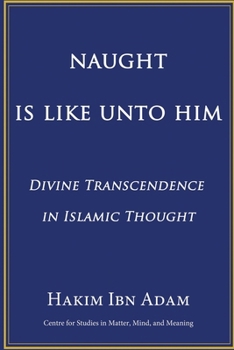
Naught Is Like Unto Him: Divine Transcendence in Islamic Thought

Naught Is Like Unto Him: Divine Transcendence in Islamic Thought examines one of Islam's most profound theological principles: the Quranic declaration that nothing resembles God. How have Muslim scholars, mystics, and philosophers preserved this radical vision of divine transcendence while still speaking meaningfully about the Divine?
This study traces the sophisticated intellectual strategies developed across Islamic tradition to address this paradox. Drawing systematically from Qur'an and hadith, classical theology (kalām), philosophy (falsafa), and Sufi mysticism, the work reveals recurring patterns that define Islamic discourse about God-the dialectic of affirmation and negation, the embrace of paradox, and the cultivation of reverent restraint. These approaches preserve divine incomparability (tanzīh) without abandoning the human capacity for knowledge and devotion.
Grounded in primary sources yet engaging contemporary questions about religious language and transcendence, this book offers scholars, students, and thoughtful readers a comprehensive framework for understanding how Islamic thought navigates the challenge of expressing the inexpressible. It illuminates both historical debates and enduring questions about the nature of divine otherness and the limits of human understanding
Customer Reviews
ThriftBooks® and the ThriftBooks® logo are registered trademarks of Thrift Books Global, LLC
