


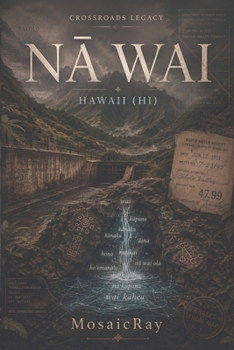
Nā Wai

Some waters disappear from maps. That does not mean they are gone.
Kai Māhoe has built her academic career around forgotten Hawaiian place names. As a linguistics graduate student working on a state hydrological survey, her job is simple: locate obsolete water sources, verify their modern designations, and preserve their older names in the record.
Then she speaks one of those names aloud.
Waihuna answers.
Hidden in the mountains above Pālolo, the spring responds to Hawaiian words the state has reduced to a historical alternative. Kai's great-aunt Lani has known this all along. To Lani, water is not a resource waiting to be classified. It is relation, memory, responsibility-and something that can be silenced when the wrong name replaces the right one.
As Kai uncovers decades of water-board files, family journals, meter receipts, and strangely recurring administrative records, she begins to see a pattern stretching far beyond one spring. No secret organization controls it. No single villain designed it. The danger is quieter: forms, maps, databases, permits, and well-intentioned systems that preserve a trace while allowing the living thing itself to disappear.
When Kai is offered the chance to reform that system from within, she believes she has finally found a way to protect both the water and the people who remember it. Instead, her best intentions may complete the very erasure she has spent her life studying.
Set on Oʻahu, Nā Wai is a literary supernatural novel about language, water, inheritance, institutional memory, and the difference between preserving a name and keeping a relationship alive.
A standalone novel in the Crossroads Legacy.
Customer Reviews
ThriftBooks ® and the ThriftBooks ® logo are registered trademarks of Thrift Books Global, LLC
