


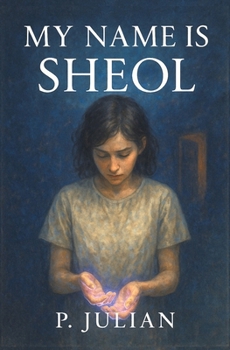
My Name Is Sheol

My Name is Sheol is a work of literary psychological fiction that explores the fragile boundary between inner experience and institutional reality.
Che is brought to a psychiatrist by her worried mother, who hopes her daughter's strangeness can be corrected. Che tries to explain the intensity of her inner life: lucid dreams that possess coherence and emotional force, and a dream-lover whose presence does not dissolve upon waking. What she encounters instead is clinical incomprehension. Her language is reinterpreted as symptom. Her experiences are reduced, medicated, and dismissed.
As Che's efforts to be understood fail, she is drawn into the involuntary side of the mental health system-an enclosed world governed by hard scientific materialism and procedural certainty, where experiences that do not fit approved models are quietly invalidated. From within this space, Che narrates her story with alternating clarity and doubt, offering an account that feels precise yet slightly oblique.
The novel unfolds as an inquiry into mental illness, perception, and authority. Is Che unwell, misunderstood, or articulating something that existing frameworks cannot hold? The narrative resists definitive answers, allowing ambiguity to remain central rather than resolved for comfort: remaining open enough to admit supernatural possibilities while at the same time cloaking that in the unreliable interpretation of dreams.
Written in a restrained, lucid style, My Name is Sheol is an introspective novel concerned with interior life, exile, love, and the consequences of being spoken for. It will appeal to readers of literary fiction who are drawn to psychological depth, unreliable narration, and novels that treat inner experience with seriousness and care.
Customer Reviews
ThriftBooks® and the ThriftBooks® logo are registered trademarks of Thrift Books Global, LLC
