


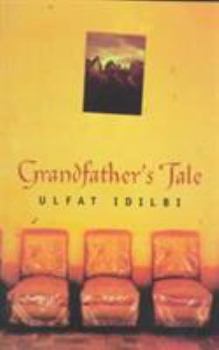
My Grandfather's Tale


Select Format
Select Condition 
Book Overview
In Damascus, an old woman tells her grandchildren tales of her own grandfather who had come from Daghestan in the Caucasus many years before.My Grandfather's Tale explores the close links between the Muslim Caucasus and the Arab world against a backdrop of conflict with the Russian empire. It is a story of yearning and return, rooted in the rituals of the Muslim faith and transcending the imperial frontiers of the time.
Format:Paperback
Language:English
ISBN:0704381001
ISBN13:9780704381001
Release Date:November 1999
Publisher:Interlink Publishing Group, Incorporated
Length:225 Pages
Weight:0.39 lbs.
Dimensions:0.7" x 5.0" x 7.8"
Customer Reviews
2 ratings
A Welcome Story
Published by Thriftbooks.com User , 24 years ago
The storytelling method of Sheherazade (of 1,001 Nights fame) is here employed by a Syrian of Dagestani descent to tell the story of her grandfather and how he came from Dagestan to Damascus in the early 19th century. As its translator notes, the simply told novella is more of an Islamic story than it is a Syrian, or certainly Arab, story. The grandfather, Salih, is brought to live in Damascus by his father, a highly-respected elderly Dagestani mufti. There, he raised never to forget his homeland-a territory in the Caucuses adjacent to Chechnya and resisting invasion by the powerful Russian empire at the time. Salih grows up in Damascus and accorded the privilege of going on the pilgrimage to Mecca with with his father. On the trip, he learns the reason behind their exile in Damascus, and vows to return to his homeland one day to see his mother. He grows older, builds a family, and rises to prominence in Damascus, and eventually he fulfills his vow to travel to Dagestan and reunite with his mother. The book is a quick read suitable for children and is a good introduction to the little known history of Dagestan and its resistance to Russian rule. Those interested in further reading are directed to Yo'av Karny's Highlanders, an excellent book on the people and history of the Caucuses, which spends 125 pages on Dagestan. The book also provides many examples of the centrality of faith in many Muslims' lives.
A modest, simple page-turner
Published by Thriftbooks.com User , 26 years ago
This is a modest, simply styled page-turner of a novel, in which the Syrian author lets a grandmother play Sheherazade to her imagined audience, always halting each "evening's story" on the brink of a compelling narrative develop-ment. The tale the grandmother tells is that of her own grandfather, Salih, who, as a boy in the early 19th century, had come from rugged Daghestan in the Caucasus to live with his father in Ottoman Damascus. When Salih's father takes him to Makkah for the pilgrimage, he reveals to Salih the bittersweet reason why Salih's mother will never join them in Damascus. Salih spends the remainder of the book in his quest to see her again, and thereby reconnect with his Daghestani roots. For the non-Muslim, this story freshly illuminates both 19th-century Islamic life and the experience of identity in a little-known part of the Islamic world.
Copyright © 2026 Thriftbooks.com
Terms of Use | Privacy Policy | Do Not Sell/Share My Personal Information | Cookie Notice | Cookie Preferences | Accessibility Statement
ThriftBooks ® and the ThriftBooks ® logo are registered trademarks of Thrift Books Global, LLC
ThriftBooks ® and the ThriftBooks ® logo are registered trademarks of Thrift Books Global, LLC
