


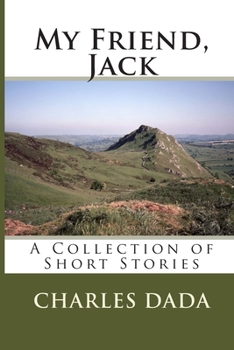
My Friend, Jack: A Collection of Short Stories

"My Friend. Jack" is an intriguing collection of short stories by Charles Dada. It's a kind of literary journey following Jack through the swinging sixties, the soporific seventies, and the reawakening eighties, as he struggles to come to grips with his dreams, fantasies, and reality.
The first story "My Friend, Jack", is a tape recoding of a woman's raw, emotional monologue. She talks about fame, drugs, love, and despair.
His first serious date with Janice in "Cinema Lovers" captures teenage excitement and nervousness - the raincoat, the cinema date, fumbling with cigarettes. It's vivid and relatable.
"Flying Free" really sets the scene. Jack's juggling his studies with his hobbies - playing guitar, sketching nude figures, building amplifiers from old TV parts, and exploring the London music scene. You get the sense of a young man trying to find his footing, both creatively and socially. And his awkward, but earnest attempts at romance come through clearly.
"The Underground" takes us deeper into the cultural shifts of the late sixties. Jack gets more involved in the London underground scene - hippies, free love, political protests, and music festivals. His relationship with Fanny is central here. They have their ups and downs, arguments and reconciliations, and eventually marry. But there's a tension between their idealism and the realities they face. The "14 Hour Technicolour Dream" at Alexander Palace is a vivid symbol of the psychedelic peak. And then the Grosvenor Square protest against the Vietnam War shows the political awakening of the time. It's a stark contrast to their earlier innocence.
"Suspended Animation" story is a poetic, almost sci-fi narrative about a girl suspended by wires, slowly regaining freedom and life. The imagery is intimate and sensual, but also isolating. It feels like a metaphor for memory, trauma, and rebirth.
These stories add depth and contrast to the more grounded narratives. They seem to represent Jack's inner world - his fears, hopes, and the emotional undercurrents beneath his everyday life. The poem "Beach Peach Girl" stands out. It's a vivid, sensual description of intimacy and desire, rich with tactile imagery. It's almost a celebration of physicality and emotional connections.
"Cave Paintings", by contrast, is a surreal, anachronistic aside, musing on the breakdown of Jack and Fanny's marriage, their separation, the loss of his children, and his subsequent loneliness. Debts are settled, and Jack moves on to a more hopeful life as a single man.
"Cornish Dream Tease", Storrs Hall", and Breton Creeps" follow Jack on a cycling and sailing tour around Cornwall, the Lake District, and Brittany, full of sensory detail. There's a strong sense of nostalgia and loneliness here, following Jack's separation from Fanny and his children. The beauty of the places contrasts with Jack's internal solitude. And throughout, the motif of searching for connection and meaning in new environments recurs. Jack is always looking for that special person, that sense of belonging.
"Babe Rainbow" brings us back to Jack's involvement in local cultural activities, like the Film Club. He meets Lindy, a strong, independent woman with a complex love life. Their growing friendship and tentative romance add complexity to Jack's relationships. The cultural references - folk clubs, blues nights, jazz, art exhibitions - paint a vivid picture of the social scene Jack inhabits. He comes full circle, as he visits Lindy in London, going on an exhilarating motor cycle ride, and revisiting his old haunts in Camden, Victoria, and Knightsbridge.
Jack is an Everyman figure, trying to make sense of life's complexities with optimism and humour. The stories show how culture, music, art, and social change shape personal identity. There's also the tension between fantasy, dreams, and harsh realities. Jack's journey is bittersweet - full of joy, disappointment, and hope.
Related Subjects
Fantasy Fiction Humor Humor & Entertainment Literature & Fiction Romance Science Fiction & FantasyCustomer Reviews
ThriftBooks ® and the ThriftBooks ® logo are registered trademarks of Thrift Books Global, LLC
