


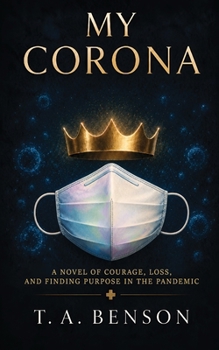
My Corona

My Corona is the intimate, human conclusion to the Around the Fire Trilogy, following ICU nurse Miles Smith through trauma, reinvention, and the struggle to define himself. Where Through the Fire explored the wounds that shaped him, and I Got Your Back examined rebuilding a life inside a flawed healthcare system, My Corona thrusts Miles into the COVID-19 pandemic-a catastrophe that exposes the fragility of hospitals and the fractures within his own identity.
The novel opens quietly. Miles wakes before dawn for another ICU shift, sharing a fleeting moment of peace with his wife, Monica. Outside, the city feels paused, holding its breath. The virus has not yet fully arrived in Big City, Texas, but its shadow stretches across every shift. Miles senses tension building long before the first wave hits.
Inside the ICU, life moves with an uneasy rhythm. Surgeries slow, staffing wavers, and policies change constantly. Miles advances through his nurse practitioner program, proud yet quietly afraid. He knows what happens when systems fail-he has lived it before.
The first crack appears in the medication room. MJ, a floated nurse, panics after losing part of a narcotic dose and begs Anna, Miles's closest friend, to sign off. Anna refuses to lie. The next day, MJ vanishes from the schedule. Miles recognizes the pattern instantly. He has survived the NEC-the committee that nearly ended his career-and knows what it feels like when guilt is assumed and truth becomes irrelevant.
The pandemic magnifies every weakness. Nurses demand protection. Leadership falters. Angel, the nurse manager, warns of a coming surge, snaps under pressure, then apologizes. Tension simmers.
Then Les arrives-a travel nurse from Mountainton, a colleague from Miles's past, and a man who had a vote in the committee that judged him. Their reunion is warm, but Miles feels the old wound reopen. He remembers the silence, the faces, the vote he never saw. Les's presence becomes a quiet ache, an unanswered question: Were you on my side?
As the pandemic intensifies, the ICU becomes a battlefield. The first critically ill COVID patient arrives gasping for air. Miles, Anna, and Les rush in wearing suffocating layers of PPE. The patient's desperate eyes plead for help. Miles anchors him with calm words until anesthesia arrives to intubate. Scenes like this repeat. Patients decline unpredictably. Ventilators alarm. Nurses cry. Administrators demand compliance while offering little clarity. Miles becomes both caregiver and witness, holding hands of dying patients who cannot see their families.
Yet amid the chaos, connection persists. Anna challenges and supports him. Monica remains his emotional home. Their marriage becomes a sanctuary. Les becomes a complicated thread-part reminder of past pain, part unexpected comfort. Their shared love of guitar offers relief from the relentless pressure, reminding Miles he is more than his trauma.
As the crisis deepens, Miles confronts the trilogy's central question: Is survival enough? He has lived reactively for years-escaping Elmwood, enduring the NEC, rebuilding his career, navigating SCI, and now fighting a pandemic. Survival is not the same as healing, and healing is not the same as choosing a future.
The pandemic becomes a mirror. Miles sees how deeply the NEC shaped him-how it taught him to doubt himself and brace for betrayal. He sees how childhood trauma and family suffering linger in his identity. He sees how the ICU has become both purpose and burden.
Miles realizes he cannot live under old verdicts. He cannot let the NEC define him or allow the pandemic to consume him. He must choose who he becomes.
In the quiet final chapters, Miles understands that healing is a decision. His life is not defined by institutions that failed him or crises he survived, but by the relationships he nurtures and the truths he confronts.
Customer Reviews
ThriftBooks ® and the ThriftBooks ® logo are registered trademarks of Thrift Books Global, LLC
