


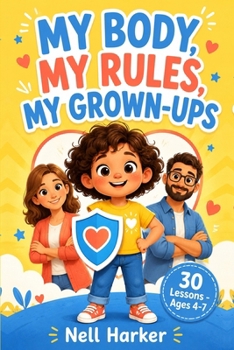
My Body, My Rules, My Grown-Ups

Every book in this category is written for parents of six-to-twelve-year-olds. By six, most of this is already late.
Thirty short lessons to read aloud with your four-to-seven-year-old, at the age when these ideas actually get installed - before school, before phones, before anyone else has explained anything.
HOW EACH LESSON WORKS
A page written to be read out loud to your child - short sentences, simple words, nothing frightening. Then one question you ask them, that a five-year-old can genuinely answer. Then a note for you: what the lesson is doing, what to expect them to say, and what not to correct. And a line for bringing it up again a week later in ordinary life, without turning it into a lesson.
FIVE SECTIONS
- This body is mine - hugs I want and hugs I don't, saying no to people we love, the swimsuit rule, and the doctor
- My safe grown-ups - who is on my list, what they are for, and what if one of them isn't there
- Secrets and surprises - a surprise ends and makes people happy; a secret is meant to be kept forever. No grown-up should ask you for one
- The funny feeling - the feeling in your tummy, what it is for, and being allowed to leave even when you cannot explain why
- Telling - how to tell, telling even if you promised not to, telling again if the first grown-up didn't listen, and never being in trouble for telling
NO STRANGER DANGER
That absence is the most important editorial decision in this book. Children are far more likely to be harmed by someone already inside their circle, so a rule that only applies to unfamiliar people protects almost nobody - and a child taught to fear strangers will hide when lost, from everyone, including the people who could take them home.
What replaces it: safe grown-ups, stop-stay-and-ask, the no-secrets rule, and the plain fact that anyone - even someone we know and like - can ask for something that is not okay.
THE TONE
Warm, ordinary, slightly boring on purpose. Closer to teaching a road-crossing rule than to a warning. Nothing in these pages describes anything bad happening. A child should finish a lesson feeling bigger, not smaller.
And it says clearly, more than once, that if something ever happens it is never the child's fault.
The closing pages tell you what to do if your child ever tells you something - including the part most parents get wrong, which is asking too many questions.
Customer Reviews
ThriftBooks ® and the ThriftBooks ® logo are registered trademarks of Thrift Books Global, LLC
