


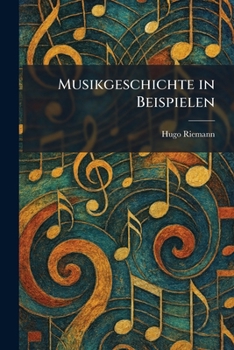
Musikgeschichte in Beispielen

"Musikgeschichte in Beispielen" is a comprehensive and scholarly exploration of the evolution of Western music, curated by the influential musicologist Hugo Riemann. This work serves as an essential anthology, providing a chronological progression of musical history through carefully selected examples that span centuries of artistic development. By focusing on the structural and stylistic transformations within the medium, Riemann offers a deep dive into the compositions that shaped the classical tradition.
The work covers a vast array of musical forms, from early polyphonic structures to the complex harmonic developments of the 19th century. Each section is designed to illustrate specific technical milestones, allowing students and scholars to analyze the shifts in counterpoint, rhythm, and melody that define different eras. Riemann's expertise in music theory provides a rigorous framework for understanding how these individual examples contribute to the broader narrative of musical growth.
Recognized for its immense pedagogical and historical value, "Musikgeschichte in Beispielen" remains a vital resource for those seeking to engage directly with the primary sources of music history. It provides a unique window into the past, highlighting the genius of composers and the enduring legacy of musical innovation. This collection is an indispensable tool for anyone dedicated to the study and appreciation of the musical arts.
This work has been selected by scholars as being culturally important, and is part of the knowledge base of civilization as we know it. This work was reproduced from the original artifact, and remains as true to the original work as possible. Therefore, you may see the original copyright references, library stamps (as most of these works have been housed in our most important libraries around the world), and other notations in the work.
This work is in the public domain in the United States of America, and possibly other nations. Within the United States, you may freely copy and distribute this work, as no entity (individual or corporate) has a copyright on the body of the work.
As a reproduction of a historical artifact, this work may contain missing or blurred pages, poor pictures, errant marks, etc. Scholars believe, and we concur, that this work is important enough to be preserved, reproduced, and made generally available to the public. We appreciate your support of the preservation process, and thank you for being an important part of keeping this knowledge alive and relevant.
Customer Reviews
ThriftBooks ® and the ThriftBooks ® logo are registered trademarks of Thrift Books Global, LLC
