


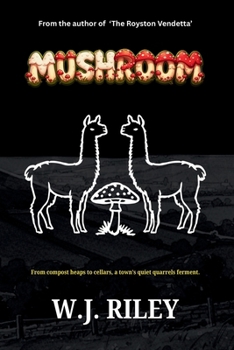
Mushroom

In Ulverston, a small group decide to grow mushrooms on the Sun Street allotments. What begins as a practical idea soon becomes something stranger, funnier, and far more quietly obsessive than anyone expected.
There are trays to build, compost to shift, sheds to borrow, soup to serve, and a hundred small decisions about keys, shelves, labels, and who gets to decide what happens next. At first, the project feels local, useful, and faintly hopeful. Mushrooms become soup. Soup becomes a small public ritual. People turn up. Bread appears. Ford House offers cellar space. The town seems willing to let the whole thing happen.
Then the cracks begin.
Meetings split. Notes appear beneath teapots. Rumours gather around ordinary objects. Ford House and the allotments stop feeling like the same project. Quiet handovers take place in plain sight. No one can quite prove what is happening, but everyone starts watching everyone else. Around the edges, Ulverston carries on in its own peculiar way: a silent Wall Cat offers practical advice for payment, Mel Churches interferes where he is not needed, and the town absorbs each new oddity without ever treating it as unusual.
MUSHROOM is a dry, sharply observed comic novel about community, suspicion, routine, local politics, and the strange systems people build when they want something small to matter very badly. It is rooted in recognisable British life, but slips steadily into controlled absurdity before ending on an image that is funny, unsettling, and impossible to forget.
For readers who enjoy literary fiction with bite, offbeat British humour, small town surrealism, and novels where the ordinary becomes quietly untrustworthy.
Customer Reviews
ThriftBooks® and the ThriftBooks® logo are registered trademarks of Thrift Books Global, LLC
