

Skip to content
Scan a barcode
Scan
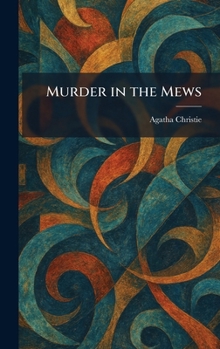
Hardcover Murder in the Mews Book

ISBN: 1025455754

ISBN13: 9781025455754

Murder in the Mews

(Book #16 in the Hercule Poirot Series)

Select Format

Select Condition ThriftBooks Help Icon

Recommended

Format: Hardcover

Condition: New

$31.95
Ships within 2-3 days
Save to List

Book Overview

"Murder in the Mews" is a compelling collection of four novellas showcasing the brilliant deductive powers of the renowned Belgian detective, Hercule Poirot. In the titular story, Poirot investigates the suspicious death of a young woman on Guy Fawkes Night-a case that appears to be a clear suicide but hides a far more sinister truth behind the smoke and mirrors of the festivities. The collection continues with "The Incredible Theft," involving the high-stakes disappearance of sensitive military plans; "Dead Man's Mirror," a classic locked-room mystery; and "Triangle at Rhodes," a tense tale of jealousy and murder at a Mediterranean resort.

Agatha Christie masterfully constructs these intricate puzzles, blending psychological depth with the meticulous logic that has made Poirot a household name. Each story offers a unique atmosphere, from the fog-laden streets of London to the sun-drenched shores of the Aegean. "Murder in the Mews" remains a quintessential example of the Golden Age of detective fiction, highlighting the author's ability to weave complex plots and surprising resolutions into the shorter novella format. Readers will find themselves captivated by the sharp wit and unerring instincts of the world's most famous detective as he navigates the dark corners of human nature.

This work has been selected by scholars as being culturally important, and is part of the knowledge base of civilization as we know it. This work was reproduced from the original artifact, and remains as true to the original work as possible. Therefore, you may see the original copyright references, library stamps (as most of these works have been housed in our most important libraries around the world), and other notations in the work.

This work is in the public domain in the United States of America, and possibly other nations. Within the United States, you may freely copy and distribute this work, as no entity (individual or corporate) has a copyright on the body of the work.

As a reproduction of a historical artifact, this work may contain missing or blurred pages, poor pictures, errant marks, etc. Scholars believe, and we concur, that this work is important enough to be preserved, reproduced, and made generally available to the public. We appreciate your support of the preservation process, and thank you for being an important part of keeping this knowledge alive and relevant.

Customer Reviews

5 ratings

Classic example of the "closed room" genre.

Also known as _Murder in the Mews_, this unabridged audiobook with Hugh Fraser is light entertainment in classic Agatha Christie style. Originally written in 1931, the book depicts the declining country house society and its ways of life, post World War I, within a clever mystery. Sir Gervase Chevenix-Gore, owner of a sizeable estate, has written to famed French detective Hercule Poirot, demanding that he come to England to meet with him. Before Poirot arrives, Sir Gervaise is discovered dead, shot in the head, a gun by his hand, and a letter saying "Sorry" on his desk, an apparent suicide. The study and windows are locked from the inside. Numerous relatives, guests, and employees of Sir Gervase are in attendance throughout the weekend, including his ditsy wife, one of his friends (who has always been openly in love with his wife), his adopted daughter, his nephew (the person who will inherit his title) and his girlfriend, a woman hired to write a biography of the family, the estate manager, a private secretary, etc. As they relate their whereabouts at the time that the shot or champagne cork or car backfire was heard, the immense size and configuration of the estate become clear, and as Poirot investigates the suicide that he is convinced is murder, the listener is struck by the arrogance of Sir Gervase and the expectations of the guests. None have much conception of the outside world, and several have motives for murder. As always, Christie drops small clues, leading the reader to form conclusions about who did what to whom, then springs a surprise ending. Hugh Fraser does yeoman's service playing all the voices on this recording without overacting, reflecting subtle class differences and personalities in the process. His French accent for Poirot is controlled, and his diction is superb. The audio moves quickly, making this a fine, light entertainment. n Mary Whipple

Typical Poirot is lots of fun

This book follows the same old Agatha Christie/Hercule Poirot formula. And, like macaroni & cheese or mashed potatoes, I found this murder mystery comforting and delightful in its familiarity. A collection of relatives and friends gather at a country house, and their dominating and idosyncratic host commits suicide ... or does he? Fortunately, shortly before the fatal shot was fired, the dead man had the foresight to invite Hercule Poirot for a visit. Thank goodness he is there to unravel things, as only he can! If you are looking for a by-the-book fact and/or forensic based mystery, like those by Cornwell or Grafton or Paretsky, you'll be disappointed. But if you're looking for evocative mood, wit and charm, you'll enjoy yourself.

gripping and amazing

4 stories are fantasticlly good.hercule flaunts his shrewd wit in this book.if you are an aficionado of whodunnit books,you must not miss this suspense treat.i think that is enough.

Four Fine Mysteries

Poirot is at it again solving two suicides (or are they?), a theft, and anticipating one homicide. Christie turns in three novellas and a short story, and all four are excellent. Christie, however, proves predictable in her unpredictability. In three of the stories, simply pick out the least suspicion-worthy individual in the cast of suspects and you have your perpetrator."Dead Man's Mirror" tells the story of the apparent suicide of a megalomaniac nobleman. It starts off as fine locked room mystery, and the motives for murder among the suspects are numerous. Poirot pieces the matter together from the array of clues he uncovers and eventually nabs the killer by the exercise of his "little grey cells". He didn't have to work nearly that hard. Christie overlooks one phenomenon of close range gunshot wounds--backspatter. All Poirot had to do was look around and see who had clothing begrimed by backspattered blood.In "The Incredible Theft" the culprit is obvious from the outset, but who among the cast of suspects did the culprit use to actually purloin the papers? Poirot works through the problem with admirable insight and solves the mystery quite handily. I set the story down quite satisfied, but then it occurred to me that the problem was seriously flawed. When you finish the story, see if you can't figure out a simple way for the thief to have taken the papers completely without detection."Murder in the Mews", another apparent suicide case, serves up a story so realistic it could have actually happened. Christie sets out clue after clue to show that the death wasn't suicide, but again she omits one telling clue. In my experience, most women who commit suicide with a handgun shoot themselves in the chest, not in the head. This serves as a good rule of thumb, but women shoot themselves in the head often enough that you can't completely rule out suicide on that basis alone. Poirot's solution dumbfounds the police and the reader alike, but the story comes to a very satisfying conclusion."Triangle at Rhodes" serves up another story that is true-to-life enough to have actually happened. Poirot, on vacation, observes a love triangle developing on the sunny beachs of Rhodes, and successfully predicts murder. He fails in his attempt to prevent the murder, but is on had to see to it that justice is meted out to the guilty. The least true-to-life aspect of the story is Poirot's prescience in predicting not only the pending murder, but the victim and the guilty. How he does this is not revealed, and the clues provided in the leadup were not enough for anyone to be able to predict murder with any degree of certainty.

Another unexpected ending for a superb plot

Agatha Christie once more will mesmerize your mind with the unexpected turns of this plot! When the master of the house is discovered shot in his study, the suggestion of suicide is brought forward. It satisfies everyone, but not M.Poirot! The investigation uncovers secret passions, past intrigues, and cunning plots. You don't want to miss this page turner!
Copyright © 2026 Thriftbooks.com Terms of Use | Privacy Policy | Do Not Sell/Share My Personal Information | Cookie Policy | Cookie Preferences | Accessibility Statement
ThriftBooks ® and the ThriftBooks ® logo are registered trademarks of Thrift Books Global, LLC

GoDaddy Verified and Secured