


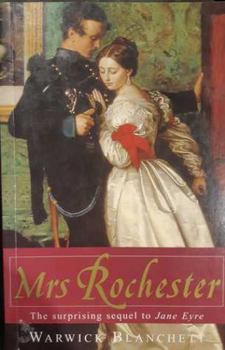
Mrs. Rochester: A Sequel to Jane Eyre

On the death of her husband, Mr Rochester, Jane Eyre accepts an invitation from her cousin Diana Fitzjames to visit her in her new colonial home in the south seas. This description may be from another edition of this product.
Format:Paperback
Language:English
ISBN:1869503651
ISBN13:9781869503659
Release Date:October 2000
Publisher:HarperCollins New Zealand
Length:288 Pages
Weight:0.75 lbs.
Customer Reviews
2 ratings
Successful satire of the romance novel
Published by Thriftbooks.com User , 24 years ago
I found this gently satirical romance novel highly entertaining. I believe it will appeal to anyone who admires Charlotte Brontë's masterly style. The hilarious sexual symbolism is perhaps less accessible to those who see the Victorian era through rose-tinted spectacles, as a time of general sweetness and light. The author comes down particularly hard on the local representative of the Church of England, portrayed as a philandering hypocrite. But anyone with the scantiest acquaintance with the sexual antics of nineteenth century missionaries in the South Pacific will appreciate that this is not merely the creation of a morbidly feverish imagination.
Wonderful recreation of Charlotte Brontë's style
Published by Thriftbooks.com User , 24 years ago
I can't do better than quote from Jane Stafford's review of this novel in New Zealand Books:If Johanna's World strives to convince the reader of its veracity, Mrs Rochester, from the outset, overtly signals its complete lack of historical truth. Other truths are, however, called upon instead. At the end of Charlotte Brontë's 1848 novel Jane Eyre, we left the narrator married to the gorgeous, albeit mutilated, Mr Rochester, celebrating the birth of their first child. The trouble with realism is that it convinces us the characters have life outside the pages that contain them. The trouble with autobiographical fiction such as Jane Eyre is that we want to know what happened after the conclusion. "Reader, I married him"-but then what? According to Warwick Blanchett, quite a lot. Mr Rochester finds recovery from the Thornfield fire difficult, and succumbs to an early death, though not before losing the family fortune. His children (Hugo and Helen) are safely at school, but what of poor Mrs Rochester? Out on the governess market again, alas, and this time, trying her luck in New Zealand rather than Yorkshire. The most enjoyable thing about Blanchett's treatment is the firmness with which his tongue is placed in his cheek. Unlike the intensely mundane world of Johanna and her family, with Mrs Rochester we are always aware of inhabiting not just a work of fiction but a work which plays upon that fiction. Delightful literary jokes abound: Blanche Ingram has married and become Mrs Henry Lynn-a composite created from the real-life author Mrs Henry Wood and the title of her famous Victorian bodice-ripper East Lynne. Lost in a bush burn-off, Jane hears the voice of Mr Rochester calling to her, just as she did first time around, lost on the moors. The place-names of the new colony are strangely reminiscent of the geography of the Brontës' childhood games, and the bedroom the heroine is placed in is, of course, red. Jane is much as we remember her from the original novel: intense, feisty, and, for some reason, irresistible to men. In fact, the plot of Mrs Rochester consists almost entirely of Jane working her way through a list of suitors, from the dashing leutenant Trevelyan to the randy Archdeacon Parfitt to the bucolic/Byronic Caleb, son of Jane Eyre's Diana Rivers. Blanchett is wonderfully true to the tone and style of the original. Landscape and setting are appropriately lush and exotic; storms and tempests appear on cue as the emotional weather of the plot demands. Manners and modes of speech are appropriately Victorian: Jane talks of "relieving the island's ovine population of their winter coats" instead of shearing sheep; women are described as being "the cynosure of all eyes"; Maori singing is described as "keening polyphony". All this could become a little tedious taken to excess. But Blanchett drives his plot along briskly, and judges exactly how long to play what is essentially an extended literary joke. Literary sequels or spin-offs have become a l
Copyright © 2026 Thriftbooks.com Terms of Use
| Privacy Policy | Do Not
Sell/Share My Personal Information | Cookie Policy | Cookie Preferences | Accessibility Statement
ThriftBooks® and the ThriftBooks® logo are registered trademarks of Thrift Books Global, LLC
ThriftBooks® and the ThriftBooks® logo are registered trademarks of Thrift Books Global, LLC
