


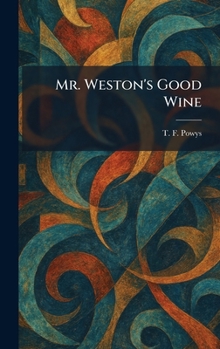
Mr. Weston's Good Wine

"Mr. Weston's Good Wine" is a profound and darkly comic allegorical novel set in the fictional Dorset village of Folly Down. On a cold November evening, a mysterious traveling wine merchant named Mr. Weston arrives in a Ford car, accompanied by his assistant, Michael. As the village clocks stop and time stands still, it becomes clear that Mr. Weston is no ordinary salesman; he is a divine figure offering two distinct vintages: a light wine representing the joys of love and life, and a dark, potent wine representing the ultimate release of death.
Through a series of strange and supernatural encounters with the local inhabitants-from the lustful to the pious-T. F. Powys explores the complexities of human nature, morality, and the divine. The work seamlessly blends elements of rural realism with high mysticism and biting social satire. "Mr. Weston's Good Wine" stands as a masterpiece of early 20th-century British literature, celebrated for its unique prose style and its daring, imaginative treatment of theological themes. This compelling narrative remains a significant example of the modernist movement's engagement with traditional folklore and religious allegory, offering a timeless meditation on the human condition.
This work has been selected by scholars as being culturally important, and is part of the knowledge base of civilization as we know it. This work was reproduced from the original artifact, and remains as true to the original work as possible. Therefore, you may see the original copyright references, library stamps (as most of these works have been housed in our most important libraries around the world), and other notations in the work.
This work is in the public domain in the United States of America, and possibly other nations. Within the United States, you may freely copy and distribute this work, as no entity (individual or corporate) has a copyright on the body of the work.
As a reproduction of a historical artifact, this work may contain missing or blurred pages, poor pictures, errant marks, etc. Scholars believe, and we concur, that this work is important enough to be preserved, reproduced, and made generally available to the public. We appreciate your support of the preservation process, and thank you for being an important part of keeping this knowledge alive and relevant.
Customer Reviews
ThriftBooks ® and the ThriftBooks ® logo are registered trademarks of Thrift Books Global, LLC
