


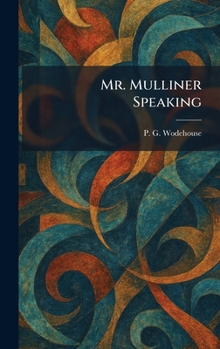
Mr. Mulliner Speaking

"Mr. Mulliner Speaking" is a delightful collection of humorous short stories by the master of British comedy, P. G. Wodehouse. Set primarily within the cozy confines of the Angler's Rest pub, the narrative revolves around the inexhaustible Mr. Mulliner, a man with an uncanny ability to relate the extraordinary exploits of his numerous relatives to any captive audience. Whether discussing the romantic tribulations of his nephews or the bizarre professional mishaps of his cousins, Mulliner's tales are characterized by Wodehouse's signature wit, linguistic dexterity, and absurdist charm.
This volume captures the essence of early 20th-century social satire, poking gentle fun at the eccentricities of the English upper and middle classes. Readers will encounter a variety of unforgettable characters, from nervous young men in pursuit of love to stern authority figures caught in ridiculous situations. "Mr. Mulliner Speaking" showcases Wodehouse's unparalleled talent for crafting intricate plots and hilarious dialogue, making it a cornerstone of comedic literature. As a testament to the author's enduring legacy, these stories remain as fresh and entertaining today as they were upon their debut, offering a perfect escape into a world of whimsical misadventures and polished prose.
This work has been selected by scholars as being culturally important, and is part of the knowledge base of civilization as we know it. This work was reproduced from the original artifact, and remains as true to the original work as possible. Therefore, you may see the original copyright references, library stamps (as most of these works have been housed in our most important libraries around the world), and other notations in the work.
This work is in the public domain in the United States of America, and possibly other nations. Within the United States, you may freely copy and distribute this work, as no entity (individual or corporate) has a copyright on the body of the work.
As a reproduction of a historical artifact, this work may contain missing or blurred pages, poor pictures, errant marks, etc. Scholars believe, and we concur, that this work is important enough to be preserved, reproduced, and made generally available to the public. We appreciate your support of the preservation process, and thank you for being an important part of keeping this knowledge alive and relevant.
Customer Reviews
ThriftBooks ® and the ThriftBooks ® logo are registered trademarks of Thrift Books Global, LLC
