


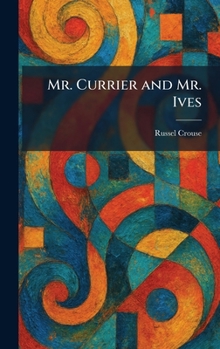
Mr. Currier and Mr. Ives

"Mr. Currier and Mr. Ives" provides a fascinating window into the social and cultural fabric of nineteenth-century America. In this engaging study, Russel Crouse explores the legacy of Nathaniel Currier and James Merritt Ives, the legendary lithographers whose prolific output captured the spirit of a burgeoning nation. From the pastoral beauty of New England winters to the frantic energy of the westward expansion and the solemnity of the Civil War, their prints served as the primary visual medium for the American public.
The work delves into the partnership that created a household name, examining how the firm's prints reflected and shaped the national identity. Crouse offers historical context for the most famous lithographs, detailing the stories behind the images that adorned the walls of homes across the country. By focusing on the themes of progress, nostalgia, and daily life, the book highlights the enduring artistic and historical significance of the Currier & Ives catalog. "Mr. Currier and Mr. Ives" is an indispensable guide for art enthusiasts and historians alike, celebrating the artists who became the definitive visual chroniclers of their time.
This work has been selected by scholars as being culturally important, and is part of the knowledge base of civilization as we know it. This work was reproduced from the original artifact, and remains as true to the original work as possible. Therefore, you may see the original copyright references, library stamps (as most of these works have been housed in our most important libraries around the world), and other notations in the work.
This work is in the public domain in the United States of America, and possibly other nations. Within the United States, you may freely copy and distribute this work, as no entity (individual or corporate) has a copyright on the body of the work.
As a reproduction of a historical artifact, this work may contain missing or blurred pages, poor pictures, errant marks, etc. Scholars believe, and we concur, that this work is important enough to be preserved, reproduced, and made generally available to the public. We appreciate your support of the preservation process, and thank you for being an important part of keeping this knowledge alive and relevant.
Customer Reviews
ThriftBooks ® and the ThriftBooks ® logo are registered trademarks of Thrift Books Global, LLC
