


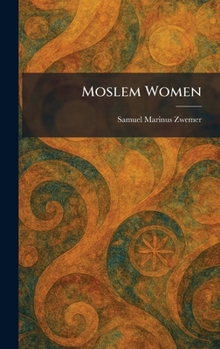
Moslem Women

"Moslem Women" offers an in-depth exploration of the social, domestic, and spiritual lives of women in the Islamic world during the early twentieth century. Written by Samuel Marinus Zwemer, a prominent scholar and missionary, this work examines the traditional roles, legal status, and cultural challenges faced by women across various Muslim societies of the era. Through a combination of historical analysis and contemporary observation, the text delves into themes of education, family life, and the impact of religious doctrine on the female experience.
Combining scholarly inquiry with a missionary perspective, the book serves as a significant historical document reflecting Western perceptions of the East during the 1920s. It provides detailed accounts of the diverse customs and conditions of women from North Africa to Southeast Asia. "Moslem Women" remains a valuable resource for those interested in the history of global missions, gender studies in a religious context, and the evolution of social reform movements within Islamic cultures. This comprehensive study highlights the complexities of tradition and the emerging calls for change that defined an era of profound transition.
This work has been selected by scholars as being culturally important, and is part of the knowledge base of civilization as we know it. This work was reproduced from the original artifact, and remains as true to the original work as possible. Therefore, you may see the original copyright references, library stamps (as most of these works have been housed in our most important libraries around the world), and other notations in the work.
This work is in the public domain in the United States of America, and possibly other nations. Within the United States, you may freely copy and distribute this work, as no entity (individual or corporate) has a copyright on the body of the work.
As a reproduction of a historical artifact, this work may contain missing or blurred pages, poor pictures, errant marks, etc. Scholars believe, and we concur, that this work is important enough to be preserved, reproduced, and made generally available to the public. We appreciate your support of the preservation process, and thank you for being an important part of keeping this knowledge alive and relevant.
Customer Reviews
ThriftBooks ® and the ThriftBooks ® logo are registered trademarks of Thrift Books Global, LLC
