


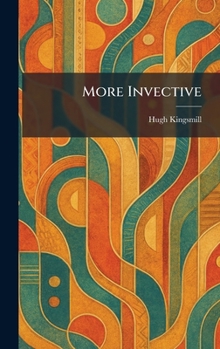
More Invective

"More Invective" is a compelling sequel to Hugh Kingsmill's earlier explorations into the art of the insult and the power of the polemic. This anthology gathers a wide array of historical and literary denunciations, showcasing the creative and often ruthless ways in which writers, politicians, and public figures have expressed their displeasure throughout the centuries. From the biting wit of 18th-century satirists to the sharp verbal assaults of the early 20th century, the collection highlights the intersection of language, passion, and critique.
Edited with the sharp eye of Hugh Kingsmill, the volume provides insight into the social and personal rivalries that have shaped literary history. The selections range from private letters and public speeches to published reviews and essays, all unified by their vigor and rhetorical force. Readers will find examples of high-minded moral outrage alongside petty personal grievances, illustrating the breadth of human indignation. "More Invective" serves not only as a record of historical disagreement but also as a testament to the enduring power of well-crafted prose in the service of conflict.
By bringing together these diverse voices, the work offers a unique perspective on the evolution of style and the changing standards of public discourse. It remains an essential resource for those interested in the history of satire and the art of the written attack.
This work has been selected by scholars as being culturally important, and is part of the knowledge base of civilization as we know it. This work was reproduced from the original artifact, and remains as true to the original work as possible. Therefore, you may see the original copyright references, library stamps (as most of these works have been housed in our most important libraries around the world), and other notations in the work.
This work is in the public domain in the United States of America, and possibly other nations. Within the United States, you may freely copy and distribute this work, as no entity (individual or corporate) has a copyright on the body of the work.
As a reproduction of a historical artifact, this work may contain missing or blurred pages, poor pictures, errant marks, etc. Scholars believe, and we concur, that this work is important enough to be preserved, reproduced, and made generally available to the public. We appreciate your support of the preservation process, and thank you for being an important part of keeping this knowledge alive and relevant.
Customer Reviews
ThriftBooks ® and the ThriftBooks ® logo are registered trademarks of Thrift Books Global, LLC
