


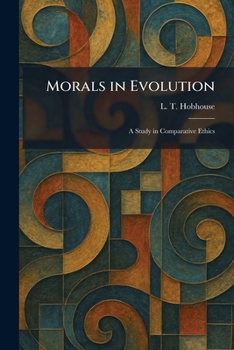
Morals in Evolution: A Study in Comparative Ethics

Select Format
Select Condition 
Book Overview
"Morals in Evolution: A Study in Comparative Ethics" is a seminal exploration of the developmental history of human morality and social standards. Written by L.T. Hobhouse, a pioneering figure in sociology and liberal thought, this work examines how ethical concepts evolve alongside the progress of human society. By employing a comparative approach, Hobhouse analyzes various cultures, religions, and historical periods to trace the growth of moral consciousness from primitive tribal customs to the complex ethical systems of modern civilization.
The book delves into key themes such as the relationship between the individual and the community, the role of law, and the development of justice and humanitarian ideals. Hobhouse argues that morality is not static but is an evolving phenomenon shaped by cognitive growth and social organization. This study remains a foundational text for students of ethics, sociology, and social anthropology, offering profound insights into the origins of our collective values and the intellectual structures that underpin human behavior. Through its comprehensive scope, "Morals in Evolution" seeks to understand the underlying principles that guide moral progress and the realization of social justice across different epochs.
This work has been selected by scholars as being culturally important, and is part of the knowledge base of civilization as we know it. This work was reproduced from the original artifact, and remains as true to the original work as possible. Therefore, you may see the original copyright references, library stamps (as most of these works have been housed in our most important libraries around the world), and other notations in the work.
This work is in the public domain in the United States of America, and possibly other nations. Within the United States, you may freely copy and distribute this work, as no entity (individual or corporate) has a copyright on the body of the work.
As a reproduction of a historical artifact, this work may contain missing or blurred pages, poor pictures, errant marks, etc. Scholars believe, and we concur, that this work is important enough to be preserved, reproduced, and made generally available to the public. We appreciate your support of the preservation process, and thank you for being an important part of keeping this knowledge alive and relevant.
Customer Reviews
ThriftBooks ® and the ThriftBooks ® logo are registered trademarks of Thrift Books Global, LLC
