


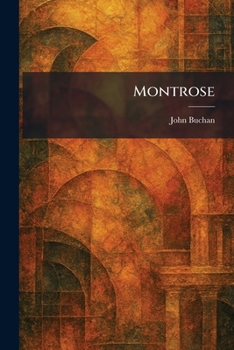
Montrose

"Montrose" is a compelling and authoritative biography of James Graham, the 1st Marquess of Montrose, crafted by the renowned historian and novelist John Buchan. This work provides an in-depth exploration of one of the most charismatic and controversial figures in Scottish history, set during the tumultuous era of the 17th-century Civil Wars. Buchan meticulously traces Montrose's transformation from a signatory of the National Covenant to a brilliant military commander serving the Royalist cause.
The narrative centers on Montrose's extraordinary military campaigns, particularly his "Year of Victories," where he demonstrated unparalleled strategic genius and leadership while navigating the rugged terrain of the Scottish Highlands. Buchan offers more than just a chronicle of battles; he presents a nuanced psychological portrait of a man torn between competing loyalties and ideals. Through vivid prose, the book captures the religious fervor, political intrigue, and personal sacrifices that defined the period. "Montrose" stands as a testament to Buchan's historical scholarship and his ability to bring the past to life, making it an essential read for those interested in military history, biography, and the complex tapestry of the British Isles' political heritage.
This work has been selected by scholars as being culturally important, and is part of the knowledge base of civilization as we know it. This work was reproduced from the original artifact, and remains as true to the original work as possible. Therefore, you may see the original copyright references, library stamps (as most of these works have been housed in our most important libraries around the world), and other notations in the work.
This work is in the public domain in the United States of America, and possibly other nations. Within the United States, you may freely copy and distribute this work, as no entity (individual or corporate) has a copyright on the body of the work.
As a reproduction of a historical artifact, this work may contain missing or blurred pages, poor pictures, errant marks, etc. Scholars believe, and we concur, that this work is important enough to be preserved, reproduced, and made generally available to the public. We appreciate your support of the preservation process, and thank you for being an important part of keeping this knowledge alive and relevant.
Customer Reviews
ThriftBooks ® and the ThriftBooks ® logo are registered trademarks of Thrift Books Global, LLC
